Showing posts with label Scotland. Show all posts

1 January 2019

Waverley to Red Sands


We were lucky with the weather. The day before had poured with rain all day. But today’s sunrise was met by a crisp, clear blue sky. There was an early autumn tinge to the air, although it was still warm in the sunshine. The wind on the water would probably cancel that warmth out though, and that was evidently why everyone waiting on the pier was swaddled in fleeces and waterproofs, just in case. Bristling with cameras and binoculars, all eyes were looking intently upstream, trained on the bend in the river beyond the wind turbines, looking keenly for the Waverley – the last sea-going Paddle Steamer still in operation.

The Waverley had set out that morning from Tower Bridge, but we were joining her at Gravesend for a jaunt down the river to the Thames estuary and the open sea, to visit the World War 2 era Army Fort at Red Sands. The strange four-legged constructions which rather resemble the alien-invader’s machines described in H.G. Wells’ War of the Worlds, or John Christopher’s Tripods trilogy of novels. Dreamt up by British Civil Engineer, Guy Maunsell, to protect the Thames and London, Red Sands was one of three army forts set up in the estuary (there were others set up in the mouth of the Mersey to protect the port of Liverpool as well). Of the other two, Great Nore Fort and Shivering Sands Fort, only the latter still stands. Great Nore was dismantled not long after the forts were decommissioned in the 1950s as it was deemed a hazard to shipping after it was badly damaged in a storm and a ship, the Baalbek, collided with two of the towers destroying guns and radar equipment as well as causing four fatalities. Since being abandoned, Red Sands and Shivering Sands have stood as forlorn rusting sentinels – testament to the martial ingenuity spurred by desperate times when Britain’s sole focus was survival in the face of all-out war and the threat of imminent invasion.


In many senses the Waverley is a symbol of Britain’s rebirth after the defeat of Nazi Germany in 1945. She was built in 1946, as a brass plaque on-board attests, to replace another ship of the same name (built in 1899) which had been lost during the evacuation of Dunkirk in 1940. A 693 tonne oil-fired steamer built by A. & J. Inglis of Glasgow, Waverley provided a regular passenger service from the Craigendoran on the Firth of Clyde up Loch Long to Arrochar. Waverley was originally owned and operated by the (recently re-convened) London and North Eastern Railway Company (LNER). She was transferred to the Caledonian Steam Packet Company, a subsidiary of the national Railway Executive, when the railway system was nationalised in 1948, which in turn later merged with the company that became Caledonian MacBrayne (CalMac). Operating in Scottish waters throughout the 1950s and 1960s until a decline in passenger demand made Waverley too costly to maintain. Hence CalMac eventually withdrew Waverley from service in 1973. Fortunately though the ship was sold to the Paddle Steamer Preservation Society for the token sum of one pound (£1). A public appeal secured the funding necessary to keep the ship in full working order, and, now operating as Waverley Excursions, the ship tours regularly up and down the British coast. Every year in the closing months of summer Waverley visits the Thames, and living near to the river I’ve often seen her sailing by or heard her whistle tooting in the near distance while pottering about in my flat. Waverley is a genuinely beautiful ship, painted in her original 1947 LNER livery colours. I’ve long wanted to get myself on-board in order to take a proper look at this unique old boat.


Today though I’ve managed to tick three things off my mental wish list. Killing three birds with one stone, as it were: First, of course, a trip on the Waverley. Second, sailing out to one of the old Maunsell Army Forts. And third, a visit to St George’s Church in Gravesend, where Rebecca Rolfe, better known perhaps as Pocahontas, is buried. Bonuses to the day’s trip were also getting glimpses of Tilbury Fort, which I’m planning on properly visiting itself one day (and no doubt a blog post on the same will follow on from that), and also glimpsing the wreck of the SS Richard Montgomery. Sadly we didn’t get to see the sunken remains of a WW2 Mulberry floating harbour near to Southend, but an additional unexpected find with a China connection (I’m not sure how, but these things have an uncanny knack of happening) was the discovery that General Gordon used to be a Sunday school teacher in Gravesend, in a building which still stands not too far from the pier where we boarded Waverley (I’ve written previously about General Gordon on Waymarks here).


When the Waverley finally appeared, rounding the bend of the river in the far distance she was moving at a steady clip and it wasn’t long before she was pulling into the pier. It was fascinating to watch her crew and the pier attendants expertly guiding the ship into place alongside. She’s not an easily manoeuvrable ship due to the fact that her paddles are locked on a single crankshaft and so cannot be made to turn independently. This means she has a very wide turning arc and so she often needs the assistance of tugs if she has to pivot a full 180 degrees when in the narrower stretches of the river. A gangplank was pushed across the starboard paddle-wheelhouse to the pier, enabling a large group of passengers to disembark before a larger fresh intake (including me and my parents) boarded. My parents had already been on the Waverley once before, travelling the stretch of river the Waverley had just navigated, hence they “knew the drill” and so following their lead we rapidly made our way to the rear of the Waverley and climbed up the steps to the top deck where we got ourselves a spot on one of the port-side benches. This turned out to be an excellent and unexpectedly fortuitous choice as when the Waverley reached Red Sands she rounded the fort with the towers on her port-side, hence we got ringside seats for the day’s main event.


I say the forts were the main event, but really the whole Waverley experience was the main event in itself. For the journey out I stayed on deck watching the sights as they passed by (catching occasional snatches of the commentary coming from the tannoy speaker mounted on the nearby mast) – Firstly, on the opposite bank to Gravesend we could see Tilbury Fort, originally built in the reign of Henry VIII and kept in use right up to the end of WW2; then passing by an early radar installation, designed to look like a water tower; followed by Tilbury Docks – with sea containers being loaded from towering mobile mechanical gantries onto massive ships. I’d always imagined Tilbury Docks to be bigger and was surprised at how small it was compared to some of the ports I’d seen in other parts of the world, such as on the Huangpu in Shanghai (see here) or Busan in South Korea. Dotted all along the river there are the remnants of several forts built as part of the defences against invasion during the Napoleonic wars in the early 19th century, often set in pairs on opposing sides of the river, and more often than not topped with crumbling concrete additions from WW2.


Waverley made a final stop, tying up briefly alongside the end of Southend Pier, where a large portion of the passengers lined up to disembark. We could hear lots of talk amongst those departing about going for fish and chips on the promenade, whereas basking in the midday sunshine we decided this was the best moment to unpack our Thermos flask and sandwiches. It wasn’t long before the ship cast off again and turning a great arc from the pier in order to head back out to sea, we began to steam off towards the open expanse of the horizon. Crossing over the width of the channel we began to make out two sets of fuzzy dots on the horizon. Those furthest away were the towers of Shivering Sands, and those which we were now bearing a straight course towards were the towers of Red Sands Fort. 


Each of the Maunsell Army Forts consist of a set of seven towers which were all originally connected by bridge-like walkways. A central control tower (which also contained the accommodation quarters) was set in the middle surrounded by a semi-circle of four towers, each mounted with anti-aircraft guns on top, a sixth tower stood to the rear of the control tower, on top of which was mounted a larger anti-aircraft gun, and a seventh tower, positioned to one side of the gun towers a little further out, had a searchlight mounted on top. The towers of the Thames Army Forts were originally built at Gravesend and floated out to the estuary where their feet were flooded and the towers sunk into position. In all, during the war, the forts shot down 22 enemy aircraft and some 30 or so V1 Doodlebug flying bombs.


Shivering Sands Fort now has only six towers after a ship, the Ribersborg, collided with one of them in fog and it collapsed in 1963. In 2005 the artist Stephen Turner spent six weeks living alone in the searchlight tower of Shivering Sands as part of “an artistic exploration of isolation” – I saw the resulting artwork, a 30 minute twin-screen slideshow, when it was displayed at the Museum of London Docklands in 2013 (see here). Both Shivering Sands and Red Sands originally stood in ‘international waters’ until the three-mile limit was later extended to twelve miles. It was prior to this change that Red Sands and Shivering Sands were occupied by the so-called pirate radio stations, such as Radio Caroline. I remember my sister and I tuning in to listen to Radio Caroline in the early-1980s, but by then it had transferred to a ship anchored further out beyond the twelve mile limit, outside British legal jurisdiction. One of the Maunsell Navy Fort platforms further up the coast, Roughs Tower, was originally occupied as a pirate radio platform in 1966. It is still inhabited, and, claiming it was effectively terra nullius, standing just outside UK territorial waters, its inhabitants, the Bates family, have even declared de facto independence from the UK – it is now known as the Principality of Sealand (see here).


As the Waverley neared the towers of the Red Sand Fort a huge flock of cormorants took wing from the top of one of the towers. The Waverley’s engines dropped down to half-speed and the drop in sound level as Waverley seemed to glide round the fort accentuated the stillness on the water, the hubbub of conversation on deck seemed to drop away entirely and everyone seemed to stand, mesmerised by the strange and slightly unreal view of these rusting metal giants passing serenely by. I took several still shots with my camera but forgot entirely to shoot any moving film until we were well out of range. 


As the engines shifted back up into full speed I decided it was time to explore the ship, so I went for a walk all around the decks and then down inside, where the most amazing sight to see are the three great pistons driving the paddle wheels. Built by the Rankin & Blackmore Eagle Foundry in Greenock, it is a real treat to see this powerful steam engine in motion. Feeling the warmth of the boilers, smelling the scent of hot grease and oil, watching the shining flash of polished steel as the pistons slide smoothly back and forth, is satisfyingly hypnotic. A porthole in the wheel house enables you to see the paddle wheel outside churning through the water, propelling the Waverley on its way.


Heading back up on deck I was just in time to catch a distant glimpse of the three black and ominous masts of the wreck of the SS Richard Montgomery sticking out of the water, now on our portside. 


The SS Richard Montgomery was an America Liberty ship built during WW2. The ship ran aground at low tide on the Nore sandbank near Sheerness in 1944. It was hoped that she would lift herself off the sand on the next high tide but the ship broke her back instead, probably due to the heavy weight of her cargo. That cargo was a deadly one too, she was packed with munitions. A salvage operation was swiftly got underway but the ship began to break-up even more, flooding several cargo holds such that the operation had to be abandoned before all of the munitions had been recovered. What remains is approximately 1,400 tonnes of ordnance – TNT high explosive. As such the ship poses a real and ever-present danger to shipping and to the built-up regions of the surrounding shoreline. A large exclusion zone has been set up around the wreck, marked by buoys, it is watched permanently both visually and by radar, in order to remain vigilant against any disaster. 


Periodically navy divers are sent down to assess the state of the explosives. This is dangerous in itself due to the poor visibility in the silty waters which means the divers often have to work by touch. So far the cargo has remained stable enough that no action has been taken, but the wreck is effectively a ticking time bomb. If conditions deteriorate the bombs within could explode spontaneously. The Maritime and Coastguard Agency currently believe this risk is very remote, but a recent TV News report estimated that if the wreck were to explode it would cause major damage and serious flooding to the immediate surrounding area. A ship with a similar cargo, the Kielce, which sank in deeper water and further from the coast near Folkestone in 1946 exploded with a force which was equivalent to a 4.5 magnitude earthquake.


Return journeys always seem oddly quicker than outward bound ones, but it was also a chance for us to take in all the things we’d not seen on the opposite bank, the last remnants of riverine industries that have long used the river as a highway. The sun was getting low now and it put me in mind of Turner’s famous painting of the ghostly Fighting Temeraire being pulled by that fateful little steam tug to the breaker’s yard at Rotherhithe. The old yielding place to the new. It also made me recall the evocative closing passages in Joseph Conrad’s novels, The Nigger of the ‘Narcissus’ and The Rover, in which he describes the experience of standing on the decks of old sailing ships gliding up the Thames estuary and the network of mudflats and tidal channels threaded through the saltmarshes of the Kent and Essex coast. A low and level landscape well-suited to gloaming skies. You can’t help but think of all the remarkable and all the ordinary journeys throughout innumerable centuries which either began or ended in these tidal reaches. The comings and goings of an age of slower travel now flung up into the silent contrails of airliners passing sleekly overhead; modern time-machines that stretch or compress time in shrinking distances, effectively miniaturising the globe. 


A day spent on the Waverley gives you a real taste of living breathing history, as unlike other vessels, steam powered machines seem to be animated by a life-force of their own. By comparison the modern machines of today seem to be bland and identikit facsimiles of one another. It seems a shame we no longer build things quite so beautiful or so well-crafted in every detail as the Waverley. It’s a wonderful thing that she is still in operation, doing exactly what she was designed to do as a passenger steamer. And given the high number of passengers on-board throughout the day, it is good to see she is so genuinely well-loved and supported, even if it can feel a little crowded. We left the Waverley at Gravesend, but later caught up with her again at Limehouse after the sun had gone down. Where I managed to catch a final farewell in filming her steaming up the now placid millpond of the river, disappearing into a gorgeous red and purple sunset, heading back up to Tower Bridge at the end of a fabulously eccentric and thoroughly British day out.


Related Links


Also on 'Waymarks'


19 June 2018

Time's River - Reflections on a Research Trip


πάντα χωρεῖ καὶ οὐδὲν μένει" καὶ "δὶς ἐς τὸν αὐτὸν ποταμὸν οὐκ ἂν ἐμβαίης
-          Heraclitus (c.535 – c.475 BC), quoted in Plato’s, Κρατύλος

I caught a glimpse of Arthur’s Seat looming overhead as the train pulled slowly into Waverley Station. The thought then struck me – that it had been something like fifteen years since I’d last visited Edinburgh. That seemed hardly possible. It didn’t feel like it was that long ago. Edinburgh is one of my favourite cities, and my memories of previous visits there seemed so fresh and clear. I’d been there three times before, each time for work. Twice working at the National Museum, and once at the Museum of Modern Art. On my last day at the Museum of Modern Art I got the job finished nice and early and so had some time to kill before my flight home. It was a nice day, weather-wise. One of the staff there who I’d been working with suggested I walk back into town along the Water of Leith ... Sounded interesting. I had no idea what an enchanted suggestion this was until I found my way down to the little wooded track and began to wander downstream, beside the winding brook babbling its way over stones, under a leafy green bower of arching trees. It was a gorgeously sunny late spring / early summer’s day. A sun-gilded day that remains etched in my memory. The solace of a solitary walk. Breathing fresh air. The sound of water, and the dappled dance of sunlight green filtered through trees, filled with birdsong. I had no idea then that this was merely a taster of my next trip, nearly fifteen years on.

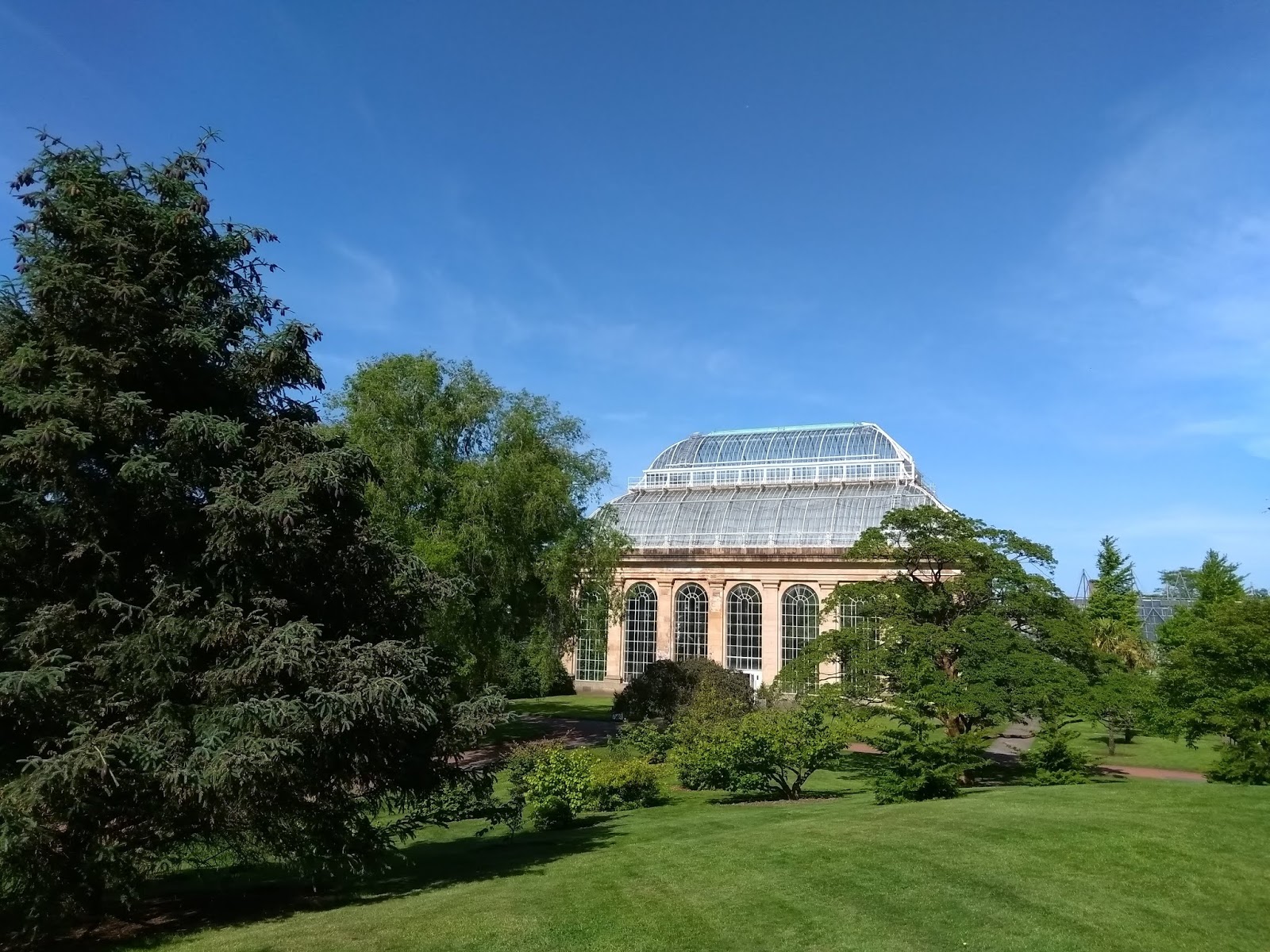
The Royal Botanic Gardens, Edinburgh


I’ve just spent a wonderful week immersed in the archives of the Royal Botanic Gardens in Edinburgh. Getting to know the great plant hunters of the Sino-Tibetan borderlands of the early twentieth century through their own words. Trying to work out what they thought of each other; hoping to map out their networks of rivalry and reciprocity. Seeing how they balanced their pursuit of pure science and commercial prospecting; pleasing syndicates of eminent professors, wealthy aristocrats, and the financially astute seed barons of the big nurseries (Veitch, Bees, Caerhays) who had sponsored their collecting trips; journeys in which they intrepidly “travelled off the edge of the map.” 

The Science Building at the RBGE


Meconopsis 'Slieve Donard'
The archives of the Botanics really are a treasure trove, and, like the best of all archives, one which provides the researcher with a quiet calm oasis in which to sift and ponder one’s subject in peace and comfort. No matter how much time you spend in places such as these, it’s never enough time. There’s always plenty more to read through than you can humanly manage. You’d need a lifetime to do it all real justice. So many tangents tantalisingly present themselves as you go, carefully sifting and gleaning your way through pages made brittle with the passing of time; like peering through a slit in the curtains of memory, offering a glimpse into an intimate world long gone and altogether removed from our own. 

One of George Forrest's campsites, near Lichiang (Lijiang), Yunnan, with stone weighted flower presses in the foreground (RBGE/RHS)


At first there’s a strange feeling as you begin to delve and sift. A strange frisson of excitement and fear. The sheer quantity of words, all written in unfamiliar scrawls, seems utterly overwhelming. How on earth are you ever going to process, absorb, and assimilate all of this primary source material in the time allotted to you? – But the only thing you can do is start at the beginning, and simply begin to read. Slowly your eyes adjust. Slowly, you get to know the distinctive handwriting of your subjects. Gradually, you get to know the people they are addressing. Soon enough, you start to perceive the nuances of character. Hierarchies of class, social standing, formalities, connections, intimacies, expectations, gratitude, grudges, jealousies, friendships – all these aspects begin to emerge, bit by bit. Layer upon layer, you begin to build your own thoughts and perceptions of these people. But you should never forget to check yourself. You should never assume too much. For example, in this instance people in these archives may begin as rivals but later on, years and years further down the line, they can end up as esteemed colleagues, friends even. And you must always be mindful to the fact that there might be something you’ve missed. Things are bound to slip through the mesh. You may not be able to examine all seven metres of shelving as forensically as you’d wish. Sometimes other researchers are poring over boxes you’d love to get your hands on. Inevitably there will be boxes you’ll have to pass over on this particular trip, hoping you’ll get a chance to come back again at some point further down the line, to check your sources and refine your first siftings – it can feel like you are panning for gold in a river where all of the sand equally glitters and sparkles.

The Himalayan Blue Poppy (Meconopsis 'Slieve Donard')


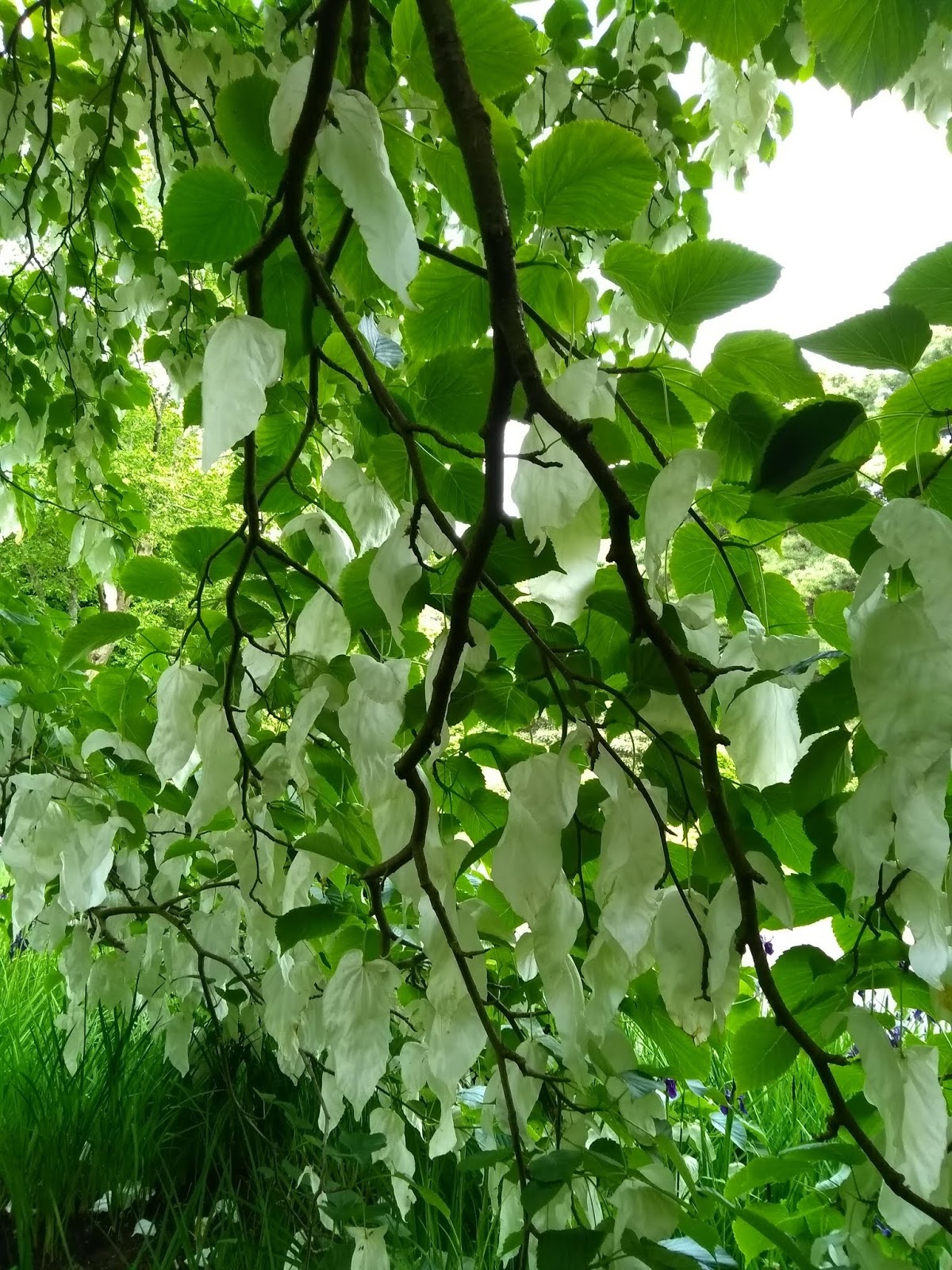
The Hankerchief Tree (Davidia involucrata)
I’m a museum person by trade, I suppose. And in many ways that makes me a terrible researcher. All museum people tend to be hoarders, and we all have an innate tendency to invest great and equal importance to all aspects of the past. To us the most mundane remnants of the past can assume as great a weight as the most momentous things. A plain and humble undecorated pot sherd can sometimes tell us far more than the dazzling golden and exquisitely inlaid turquoise trophy statuette of some long dead king, and so we obsess over the minutiae and get bedded down in the details when time should be of the essence. I’m a completist. I want to assimilate and absorb it all. 

I often think though how lucky (and in some ways how cursed) I am that I left it so late to start my PhD – because now we have all the advantages of the digital age, things that simply didn’t exist when I was an undergraduate; where we can search through library databases, collating lists of obscure journal articles which we might never have stumbled upon otherwise; and likewise, when in the archives, we can scan and photograph reams of material which we can take away and pore over at length afterwards, outside the archive. Accruing for ourselves an endlessness to our quest which can beguile and overwhelm us by turns all the more oppressively. I’m often left wondering: where and when will I know to draw the line? Where and when to say here and no further: This is as much as I can humanly do at this moment ... My subject will always be evolving. I may need to revisit and revise the things I think and the things I write now further down the line. But then is then, and now is now. You can only cross those bridges further down the stream when you eventually come to them. It’s impossible to look at everything, to read it all and to take it all in, and know it all completely. As Heraclitus observed, you can only step into the same stream once, because it is always changing, always flowing … πάντα ῥεῖ


Archives seem static, but really they too are rivers, rivers of memory. Everyone will take different things from dipping into those same waters. That’s why it is also fascinating to bump into other researchers in such places, people looking at the same material as you. Others obsessed with the same historical characters as you are. Chatting to them reveals nuances you might not have seen otherwise. (I was very lucky on this particular research trip. It was like my bibliography had come to life! – Magically enabling me to make some great new academic friends, quizzing them directly on things I’d read in their published works). Similarly, consulting the same archives other scholars have worked on and written about before you may well cause you to revise your own thoughts and the opinions you’d made from reading their works. The things which may have seemed definitive may well begin to crumble, or, seen in a new light, they begin to change their reflections as you read around the passages those other scholars who have gone before you have quoted from these same letters, reports, extended diary entries, and the like. We are lucky these places exist.

Rhododendron campylogynum (Forrest 27357)


Rhododendron forrestii (sadly not in flower)
I was doubly fortunate on this particular trip. Reading through the words of the plant hunters, George Forrest, Frank Kingdon Ward, Reginald Farrer, Joseph Rock, George Sherriff and Frank Ludlow. The men who had stepped “off the edge of the map” (Kingdon Ward’s phrase, yet often echoed by many of his fellow explorers, “the first white men” to wander up these valleys and mountain passes). Some of their papers still contained packets of seeds they’d sent back. Seeds which had been cultivated at the RBGE, successfully propagated, and then sold to the public by commercial nurseries such as Bees and Caerhays, introduced to everyday gardens across the country. My inadvertent luck was timing. For this was the time of year when many of those plants they’d first brought back to the UK were now in flower. Each day after the library closed there was still a couple of hours left where I could wander around the gardens of the Botanics (which, unlike Kew Gardens, is free to enter!), hunting down those same plants. The Himalayan Blue Poppy, Meconopsis Slieve Donard. Augustine Henry and Ernest Henry Wilson’s tree of "ghostly handkerchiefs", Davidia involucrata. George Forrest’s Rododendron forrestii, and Rhododendron campylogynum. Kingdon Ward’s Rhododendron pemakoense.

Rhododendron pemakoense (Kingdon-Ward 6301)


In many senses, it seemed a perfectly rounded research trip – studying these men who were themselves so fascinated by nature, hunting through their words as they’d hunted for plants in the foothills of India, Burma, Tibet, and China. Each day began and ended with a walk by the Water of Leith. Time in which to think through ideas inspired by the words I was reading in the archives, planning out what material I hoped to examine that day, and reflecting on the things I had found so far. All the while listening to that relaxing sound of water babbling over a tumble of stones. Catching glimpses of birds down by the water’s edge or up in the leafy boughs overhead. Dippers, Chaffinches, Dunnocks, Robins, Blackbirds, Mallards. Meeting dog-walkers and their dogs gleefully happy to be out on the same riverside walks as me, feeling just as gleeful and happy myself. It hardly seemed credible that I was in a major city, with all this abundance of nature, wildlife, flowers and fresh air. A serendipitous discovery after dinner one night was the fact that the restaurant I’d dined in was the birth place of the artist, David Roberts – another explorer of a different sort, who in the early nineteenth century painted so many magnificent views of the ancient ruins in Egypt – his house built in 1605.


The House where the Artist, David Roberts (1796-1864), was born in. Built 1605.


That first afternoon when I arrived in Edinburgh I began by strolling up the Mound, past the Castle and then down into Grassmarket, in search of a second-hand bookshop I remembered from my last visit to the city – but sadly it was gone. Evidently long gone. Now a trendy eatery. Like all the other trendy eateries along that road. But happily I did find another second-hand bookshop near the Botanics, and perusing its musty basement I found a gem of a souvenir to compliment my trip – and more importantly to compliment the reading material in which I had been engrossed for the week or so prior to my trip: George William Usill’s Practical Surveying – A Text-Book for Students Preparing for Examinations or for Survey Work in the Colonies (London: Crosby Lockwood and Son, 1900). The books of Frank Kingdon Ward’s protégé, Ronald Kaulback, and his friend and fellow explorer, John Hanbury-Tracy (the subject of next month’s post here on Waymarks) are filled with passing references to mapmaking in these regions. Hence I’d long been wanting to hunt out a contemporary book such as this one, which might lend some insight into the rudiments and the mechanics of the scientific instruments and the survey methods which these rum chaps (their books are particularly humorous too!) would have been using on their long and arduous treks through the borderlands of India, Burma, China, and Tibet.


Dalrymple-Hay's Curve-Ranger


Plane Table


Transit Theodolite (fitted with a supplementary level)


All in all it was a highly productive and useful trip. Unexpectedly relaxing and refreshing, it was exactly what I needed to reboot my flagging mind and faltering stamina. It’s flipping hard trying to write a PhD part-time! – Trying to sustain concentration, snatching an hour here, half an hour there, in my lunch hour, in the evenings, and at the weekends; whilst still having to contend with day-to-day chores and the demands of an often very demanding full-time job. I seem to be permanently tired all the time, and often find I can’t help falling asleep after eating. I’ve never worked so hard in all my life; but my PhD is a real labour of love, and that’s why every day I sorely wish I had the luxury of focussing on it full-time. 


As I found my seat on the train heading home late on the Friday evening at the end of my trip I realised that the carriage was full of teenagers, sixth formers in their final year, who’d all been visiting the University at Edinburgh – “checking it out” as one of their prospective choices after they complete their A-levels ... It startled me somewhat to do the arithmetic in my head and realise that many of these kids were born around the same time I made my last few trips to Auld Reekie! … For a moment I envied them starting out, studying full-time. But then it occurred to me that I was just as lucky as them, in that even though it’s taken me a long time to figure out what area of history I wanted to specialise in, I’m very fortunate that the system allows people like me to come back into the education game (thanks to Birkbeck!). The stresses and strains for me are no less than they are for these kids; of course, some are the same (time, money) and some are different (work, life). But it’s all part of the process. That river of time somehow speeds up in some ways as you get older, but in others it also slows down. Time waits for no one, even when it dawdles. The Water of Leith seemed no different last week to how I remembered it on that sunny summer’s day all those years before (… before those prospective students were even born!) – the same river, but also a completely different one – archived in my memory, yet still flowing from the past into the future. 

I’ll get there in the end, and there will come a day when I look back and wistfully say to myself – “When I was writing my PhD … blah, blah, blah.” – It will be the golden times such as these, my research trips to the libraries and archives at the Botanics, the Royal Horticultural Society, the National Archives at Kew, the Royal Geographical Society, the British Library, and a whole host of other magical places that I will remember most fondly. Because it’s in these places where we are able to wander “off the edge of the map” and really begin to explore. The last part of the challenge though, as for all explorers, is writing it all up, tying it all together and charting our route through, so that others might follow where we have been and see the things we’ve seen, reinterpreting them anew.


Special thanks to Leonie and Graham at the RBGE’s library for all their very kind help and interesting chats about the wonderful archives in their care, their deep knowledge of which is truly fantastic. The RGBE’s library is certainly one of the most welcoming and comfortable research libraries I’ve ever visited. 

If you happen to be in Edinburgh next month and you are interested in hearing more about the plant hunter, George Forrest, do go to hear Leonie Paterson’s talk at Lauriston Castle on July 19th, 2018. 


Also on ‘Waymarks’


to 2005 << << << Rewind