3 April 2023

Flowers & Fantasy - 'Plant Hunting' As Colonial Era Board Game


Whose turn is it? 

I’m not an avid board game player, but some of my friends are, and so I have often been corralled into playing with them. A friend of mine even invented a board game which was based on our group of friends and the archaeological excavation we used to spend our summers working on. It was ingenious and the playing of it even managed to reveal real-life gossip and secrets which some of the players had been unaware of previously, so whenever we played, it was always immensely good fun – although sometimes game-play could go on for hours and hours!


When I was a child, I remember seeing a board game advertised on TV, which I must have nagged my parents to get me for Christmas one year. It was called Lost Valley of the Dinosaurs (Waddingtons, 1985). It was a kind of Indiana Jones meets The Lost World, or The Land That Time Forgot themed game (NB – it came out well before the first Jurassic Park movie) in which players had to cross a valley to reach an Aztec temple and retrieve a treasure of gold coins, but there were a number of obstacles which could stop you. As I recall these were primarily either falling into a swamp and going round in circles until somehow you were able to get out; that is, if you didn’t get eaten by a swamp monster. Similarly, you might get eaten by marauding dinosaurs or a pterodactyl swooping down while you tried to cross the board. The routes across which might also become cut-off if a volcano erupted and lava subsequently began to spread across the board. It was really good fun, and I played it many times over the years with both family and friends.


The theme of the game being exploration evidently belied the childhood interests which in later life would lead me on to researching and writing a PhD dissertation about early twentieth-century explorers in the Sino-Tibetan borderlands. Indeed, Lost Valley of the Dinosaurs has some echoes of the search for fossilised dinosaur eggs in 1920s China. A genuine fossil hunt in which the fedora hat-wearing Roy Chapman Andrews is often touted as the real-life inspiration for Indiana Jones himself. But it was the so-called ‘plant hunters’ who perhaps have interested me the most alongside the possibly better-known archaeologists and anthropologists. As regular readers of this blog will know – ‘plant hunters’, such as Frank Kingdon-Ward, George Forrest and Joseph Rock, Reginald Farrer and Bill Purdom, as well as Frank Ludlow and George Sherriff, have all been featured in various blog posts here on Waymarks. And I am always on the look out for new information about all of them, but one thing I wasn’t expecting to appear was a board game loosely based on their wider botanical cohort's endeavours. Botany – A Victorian Expedition … A Game Full of Adventure, Intrigue and Flowers (Dux Somnium, 2023).


The promotional blurb for this particular board game, which doesn’t appear to have been released yet, seems to imply it is based on the plant hunters of an earlier era – perhaps more along the lines of ‘eminent’ Victorians, such as: Robert Fortune, Richard Spruce, Walter Henry Bates, Alfred Russel Wallace, and Charles Darwin – perhaps with some ‘indomitable’ women explorers, of the likes of Isabella Bird, Amelia Edwards, Mary Kingsley, Nina Mazuchelli, or Lizzie Hessel, added in for good measure. What strikes me the most though is the tone of its promotional blurb which seems weirdly out of joint with our current times. It reads like a ringing endorsement of colonialism. Almost as though it were an entertaining-yet-educational tool for instilling a colonialist ethos in the impressionable minds of a rising generation of young board game players and would-be empire builders!

 “Adventure, intrigue, and flowers! Botany is a strategy board game where you take on the role of a Victorian Era flower hunter as you explore the world to gather fortune and fame and be named the Royal Botanist. In Botany, each player takes on the role of a character whose abilities will shape the way they play the game. Will you focus on exploring the globe in search of the most valuable specimens? Will you make quick and efficient trips to gather reputation quickly and build your estate?

 Each player begins the game with a set of randomized goals that they then use to plot their path to victory. When players set out from their estate, they have access only to the coins they can carry with them. They can use these coins to traverse the globe and gain crew members and items to improve their odds of surviving the unknown, enhance their abilities, and increase the efficiency with which they traverse the map. However, there is danger in spending too freely, and players must ensure they have enough wealth on hand to return to England with their specimens intact.

 Turns in Botany are streamlined in order to minimize downtime and keep players engaged. Players will move around the map, build their character, and experience the story of their rise to fame, all with an eye for efficiency. Points are gained by improving the quality of your garden, retrieving live specimens from around the globe, and adding preserved flowers to your botanical press. The specimens that players hunt, the goals they focus on to achieve victory, and the events they experience create a unique feel across each game.” – [description from publisher; see here]


The board game’s website seems to be using a nostalgia for empire, particularly in the form of its aesthetics, quaintly emphasising ‘Beautiful Victorian Artwork – Historical illustrations and photography immerse the player in the world of Victoran [sic] plant hunters. Enjoy learning about the flowers of the world with this incredible art.’ As well as, ‘Unique Characters and Entertaining Events – Botany’s characters and events paint a story as you traverse the globe to become the ultimate flower hunter.’ This appears to be a kind of “fighting fantasy” version of colonial capitalism in the form of a board game. Monopoly (Parker Brothers, 1935) for die-hard, flower-fancying imperialists, perhaps? – From an academic point-of-view, I am thoroughly intrigued. We are all highly accustomed to seeing the tropes of imperialism and a colonial worldview consistently perpetuated in TV dramas and Hollywood films. Such themes are invariably tweaked a little to fit our times, or as a sop to our current sensibilities. It is often highly debateable (and much debated) as to whether or not these tweaks either veil or highlight the iniquities of the past, or virtue signal by equivalence the (hopefully) more enlightened attitudes of our present age. How does such a newly invented board game fit into this present era of decolonisation, ‘Rhodes Must Fall’, versus the rise of populist nationalism and other politically conservative agendas, such as a nostalgia for empire? ... Consequently, I’d be fascinated to know more about this new board game – particularly how it was first conceived and how it came about; what source material was used to create it; and what it is actually like to play it.

I may well have to call up my old board-game-loving digging pals and see if they’d like to assist me with some further research.


In the meantime – for anyone who might be reading this who is also intrigued by the questions raised above and would like to know more about the actual history of ‘plant hunting’, economic botany, science and empire – I very much recommend the following books and websites as good places in which to start:


Lucile H. Brockway, Science and Colonial Expansion: The Role of the British Royal Botanic Gardens (New York: Academic Press, 1979)

Fa-Ti Fan, British Naturalists in Qing China: Science, Empire, and Cultural Encounter (Cambridge, Mass.: Harvard University Press, 2004)

E.H.M. Cox, Plant Hunting in China: A History of Botanical Exploration in China and the Tibetan Marches (London: Collins, 1945)


The Economic Botany Collection at Kew Gardens

The Mobile Museum Project

How Victorian Plant Hunters Shaped British Gardens


See also:

Playing Oppression: The Legacy of Conquest and Empire in Colonialist Board Games, by Mary Flanagan & Mikael Jakobsson (MIT Press, 2023)


Related Reading on ‘Waymarks’


Botanical Beginnings in the Sino-Tibetan Borderlands

Hyperbole Most Florid – Reginald Farrer & William Purdom

Language & Landscape in West China & Tibet

Exploring the Land of the Blue Poppy – Frank Kingdon-Ward & Tibet

Frank Ludlow & George Sherriff’s “Botanical Endeavours”


20 February 2023

Abney Park, Stoke Newington - A 'Memento Mori'


Clissold Park

Yesterday I took a break from my academic writing projects, and, making the most of the wonderfully clement weather, I hopped on the Number 73 bus, heading to Stoke Newington. I lived in ‘Stokey’ for five years from 1997, and I think this was my first visit back there since at least 2004. All-in-all, it really was a perfect day. I spent a nostalgic afternoon wandering around Clissold Park, where I used to like sitting on one of the benches by the ponds, reading in the early summer evenings after work. I was glad to see the Public Library is still there, but most of the shops and restaurants along Church Street have changed since my day; except for one or two, like Church Street Bookshop, Rasa, The Blue Legume, and, happily, the wonderful old pubs.


A Perfect Day - Stoke Newington - 1998


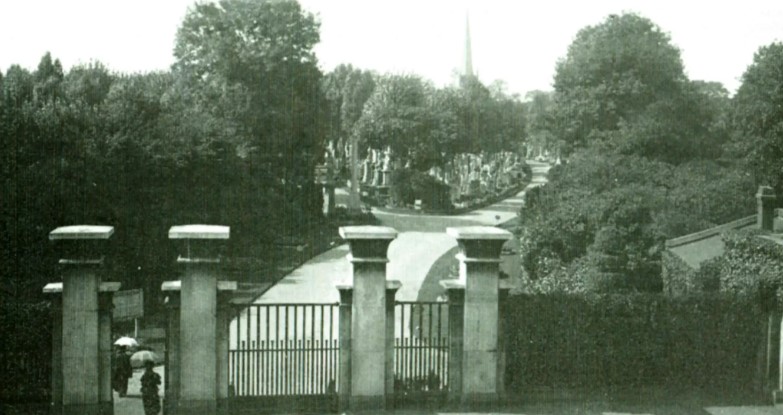
Stoke Newington seemed a lot busier than I generally recalled it, although this was probably due to the wonderful weather. A not too crisp, cold clear blue sky made it feel a lot like Spring had truly begun at last. I noticed crops of crocuses and snowdrops were out in many places, adding a welcome dash of colour beneath the still bare branches overhead. Claustrophobically shying away from the slow foot-shuffling crowds, I ducked into Abney Park Cemetery, and proceeded to get happily lost in the verdant woodland, drinking in that dank fecundity of the air with the ground softly springy underfoot. There seems to be a lot of restoration work going on around the entrances on both Church Street and the High Street, plus the long derelict, pigeon-haunted chapel in the centre of the cemetery appears to be in the process of being exhumed from years of ruin and neglect.


Church Street, Public Library

After emerging from the pleasant quiet of this labyrinthine Gothic woodland, I wandered up Cazenove Road to Springfield Park, with its wonderfully dizzying vista looking down to the River Lea where it meanders lazily alongside Walthamstow Marshes. Crossing the bridge to Springfield Marina, I found multitudes of people once more. All of them, out for a stroll like me. Ambling along the gravel track, passing under the ‘Avro Arches’, heading past flowering hawthorn bushes towards the next footbridge where I crossed and doubled-back along the opposite shore. Passing the many-patroned Anchor and Hope pub, then climbing back up the steeply raked hill to the pond at the top of Springfield Park once again, before making my way back down to Stoke Newington. Here I idly wandered around some more. Retracing my former well-trodden and much familiar routes through the backstreets, passing the house where Joseph Conrad once lived on Dynevor Road when he was lodging in London between ships, and where it is said he later took inspiration for the characters of the Verloc’s in his novel, The Secret Agent (1907), from his landlord and landlady.


High Street

Back on the High Street, I was taken aback to see the road had been closed off completely. It was filled with a monstrously huge structure made from scaffolding. I later found out that back in January part of one of the old Victorian terraces of shops had collapsed into the street. Thankfully, no one was hurt at the time, but everyone living and working there has since had to be rehoused, or have had their businesses suspended, while Hackney Council attempts to shore up the building. I used to live on the High Street, just next to the Police Station – opposite the derelict Vogue Continental Cinema, and so I knew and was known by several of the shopkeepers; but here again, most of the shops and restaurants from my day have long since disappeared, as has the building in which I used to live. Looking into the whitewashed window of the launderette, where I often spent my Saturday mornings, I read a notice pinned to the door announcing its final closure in June 2022, thanking its many customers over the years. It had outlasted my patronage by twenty years. I used to love its smell of soap powder and warm-linted tumble dryers. The lady who used to run it had a comfortingly warm smile too. There was a friendly camaraderie among the many familiar faces who called the High Street home back then. I remember one time, after a power cut one evening, an old boy who came into the little supermarket next to the Methodist Church had everyone in stitches; telling everyone how he had been sitting on the toilet when the lights went out, and how for the best part of an hour he’d had to sit there with his “arse getting cold without even a cigarette lighter” to help him pass the time in reading a newspaper until the lights eventually came back on!


The Old Police Station

Looking back, those five years seemed to be filled with many magical memories such as the ones which were now coming flooding back to me. Wandering around those streets, it was a wonderfully nostalgic way to wile away an afternoon. But my connection to this place goes deeper than my five years living above a shop on the High Street. More than a hundred years ago, many of my forbears on both sides of my family lived in Stoke Newington and Green Lanes too. One of my great grandfathers worked for the Metropolitan Water Board, and my great grandmother died while they were living in Stoke Newington. I was reminded of this whilst ambling around Abney Park Cemetery. I’ve not been able to find out where she was buried, and I have always wondered if she might have a grave somewhere hereabouts. Abney Park is crammed with gravestones, each one representing the memories of numerous lives lived only to be forgotten. Reclaimed by the greenery in the sacred grove of one of London’s “magnificent seven” Victorian cemeteries. I’d often got lost in here back in the days when I called Stoke Newington home, and today was no different. Just when I realised I’d lost my bearings, my eye was caught by a name on one of the tombstones nearby. It wasn’t the name of my great grandmother, but it was a name which was familiar to me. No longer a common name today, it was shared by an old lady whom I’d known when I was young. We used to be bellringers together at the church back in the part of northwest London where I grew up. As I read the inscription on this headstone, I realised that the following day – today (20 February 2023) – would be the centenary of the death of the woman laid to rest here.


Abney Park Chapel

There are many famous people buried in Abney Park, but there are many more besides who were ordinary folk much like you and me; known only to those who knew and loved them in their day. Eleanor Rigby-like, I wondered who was this particular woman? – There was no indication of how old she was when she died, nor if she and her husband had any children, though it did record the fact that he survived her by several decades and was eventually buried with her at the age of 72. ‘Reunited’ as his inscription said. There was something about the name, the style of the leaded-lettering, and the serendipity of my happening upon her grave just one day short of a century since she’d died. I wondered if anyone might come and visit them both tomorrow, but the grave didn’t look like it had been tended in a very long time. And so, thinking about this – and about my own great grandmother who had died locally – whilst I wandered around Stoke Newington, reevoking memories of my own times gone-by living just a few streets away, I later penned a poem to this lady whom I did not know as small a centennial remembrance.


MEMENTO MORI


‘Dearly Belov’d’ of husband’s memory;
She died more than thirty years before he.
Laid to rest in Abney’s cemetery,
Where I did come upon her grave by chance.
My eye happened to catch her name askance,
Her headstone hugged on one side by a tree;
On the other, a tendril of ivy
Clung to the green-shaded slab; one among
All the many whose names are now unsung.
All except for William’s dearest one,
Whom, here today, happily I did see,
Close to the hundredth anniversary
Of her death: tomorrow as it will be.
Time’s passing, a century less one day,
This headstone assures tomorrow Cissie
Will be remembered now at least by me.
In elegant script, her memorial
Merging with Abney’s green arboreal;
‘Ici Repose’ since nineteen twenty-three,
I write this verse in remembrance of one
Who lived, was loved, and yet is now long gone:
Sadly missed, – Cecily Mary Picton,
A name unknown, and yet unforgotten.


Abney Park Cemetery, Stoke Newington – 19th February 2023.


Abney Park Cemetery


You can view a photo of Cissie’s headstone taken in 2007 here on Flickr.


And you can listen to a fascinating talk about the forgotten poets who are buried in Abney Park Cemetery here on Abney Park’s equally fascinating website.


Likewise, there’s a great video diary following John Rogers on one of his walks around several of the areas I’ve mentioned above, which you can watch on his YouTube Channel here. I’m a big fan of John’s rural and urban ‘psychogeographical’ videos, I highly recommend them.


Amir Dotan's Stoke Newington History Website, also highly recommended.


High Street Entrance to Abney Park Cemetery


Also on ‘Waymarks’:


Family Trees – Retracing My East End Roots


“Here Lies One Whose Name is Writ in Water”


Visiting Joseph Conrad’s Grave – Canterbury


Albion Road