Showing posts with label Bookshops. Show all posts

11 October 2016

A Life Without Books ...


I’m big on books. A life without books would be no life at all. I read every day. I couldn’t imagine a day passing by without me dipping into a book, no matter how briefly. It’s one of the reasons why I’ve never owned a television, there are far too many books to read (plus it’s easier to listen to the radio whilst doing the washing up than it is to watch a TV screen). I wasn’t always this way inclined though. As a child I preferred being read to rather than reading for myself. It was only later on that I began to enter into that solitary yet contented withdrawal which is reading for oneself. That propensity to absorb by listening is perhaps what later lead me towards the study of history and anthropology. And perhaps it’s also why I prefer the radio to the telly – they do say, after all, that you always get better pictures on the radio!

Not everyone is keen on reading. I once lodged with a friend who was far more interested in outdoorsy-type pursuits. I remember her incredulous exclamation as she returned one frosty Sunday morning from a bracing off-road cycle ride up and down the Chiltern Hills, only to find me several hours later sitting in exactly the same position on the sofa, cosy indoors with the same book in front of me. “You haven’t moved!” she exclaimed. But I’m sure I’d travelled just as far in that space of time as she had, except in a different way – with each turn of her bicycle’s pedals matched by the number of pages which had accumulated under my left thumb.
 
Needless to say, being such a devoted reader, my flat is stuffed full of books. But alas the space for an ever growing personal library is finite. The bookshelves I’ve set up here are groaning under the ever-accumulating weight. Nearly all the flat surfaces in my home are simply abhorrent vacuums which have swiftly been filled by piles of pages – books, magazines, off-prints, TLSs, academic journals, notebooks, guidebooks, dictionaries, etc. Given the limitations of space every-so-often necessity prevails and I have to thin my library down. This always poses a deeply difficult dilemma: Which books should make way for new acquisitions?

I attempted this task only this morning in fact, and was rather surprised at the outcome. I managed to clear a small swathe of tomes from a shelf which meant a stout pile that had recently accrued on the desk nearby (and which, very inconveniently, was preventing me from actually using my desk) slotted neatly into the vacated shelf space. My surprise wasn’t so much at the apparent neatness of this act of rotation, it was rather at the act of negation – Why was it, I wondered, that only now could I envisage living without these particular books which had once been deemed so important and integral enough to my life that they should have taken up permanent residence on my bookshelf? What had changed? Was that prior importance simply relative? Had I lost interest in the topics they were centred upon? Had I realised that other books in my collection covered the same subjects such that these ones were now redundant? … In this particular instance, I realised my re-classification was essentially based on what might best be described as ‘associative memory.’


As I scanned the rest of my shelves this realisation began to sink in more deeply. It struck me that most of the books I own, and particularly those books I’ve owned the longest, are in some way or another ‘associative tomes.’ In my mind, I don’t just simply recall them as being particularly good reads, although invariably this is almost always the case too; but moreover, I associate these specific books with people, places, or particular times in my life. The book may have been given to me by a dear friend or relation, or it might have been inherited from a certain family member, or it might have been bought or read in a particular place whilst travelling or at some other significant phase in my life. It dawned on me that reading wasn’t simply confined to what the words within those pages said – more often than not, when scanning the spines of those titles which I’ve already read, I realised I could almost without fail recall where I’d bought or been given the book, and also where and when I’d first read it.


As such then, I began to perceive that my library is caught in a constant ebb and flow of change. It regularly builds and reduces itself. It is continually being re-categorised and refined. Time and sensibility as much as utility and space are the main factors which regulate what is retained and what is lost. In essence my personal library is my life in the sense that it acts as a kind of mirror to my memory. The books of greatest value are not simply those which are or might be most useful to me either now or potentially in the future, but they are also those which are most important to my past and my-previous-selves as well.

Alberto Manguel has written a wonderful book which is a meditation on libraries – inspired by his own library, which he has lovingly lodged in a 400 year old converted barn in France – The Library at Night (Yale, 2005) is a paean to books, book-collecting, and the act of reading; examining the use, nature and representation of libraries throughout the ages across the world. Opening the front cover I see I’ve written my name at the top of the title page in pencil with the note “Tokyo, 2011.” I didn’t really need this aide-mémoire as I still distinctly recall buying this book at the big Kinokinuya bookstore in Shinjuku’s Takashimaya Times Square (over the years I’ve spent a small fortune there). I also distinctly recall devouring the book in the warm evenings over the course of a week or so that particular summer. Since bringing it home to my flat in the UK I’ve evidently not been the only one to keenly ingest this particular book as the tell-tale gnawing of a silverfish can clearly be seen on its spine (a literal ‘bugbear’ of my library as it’s currently stored in my flat is that it seems to regularly draw in these ancient gnostic little critters!). 


Wherever I go I always seek out libraries and bookshops. I’m particularly drawn to secondhand bookshops, as these are the places where one is most likely to find rare and unusual treats as readily as finding discounted treasures. This habit began whilst I was still at Sixth Form College, when I regularly used to take myself “up to town” to spend a day scouring the old bookshops along London’s Charing Cross Road as well as the famous ‘Ripping Yarns’ bookshop in Highgate. Many of these shops, as with the equally enthralling old bookshops in Greenwich, have sadly long since disappeared. Yet thankfully, there are still a handful of good secondhand bookshops still to be found in London; and, just as in my Sixth Form days, I still visit these regularly in order both to bleed my wallet and better insulate my flat for winter.

On a recent trip to Delhi I passed along a book market lining the street whilst making my way to the famous Red Fort, but it was in the small multi-level labyrinth of ‘Bahri Sons’ in Khan Market that I found the kind of books I was looking for. Likewise, I’ve found similar bookish enclaves in other cities too, such as the Bras Basah area of Singapore and Tokyo’s Jimbocho. I’ve spent a lot of time and a lot of money in Jimbocho over the years, particularly when I was living for a time in Tokyo in 2009.

One of my favourites there is ‘Kitazawa Books,’ which is excellent for obscure academic titles as well as old Penguin paperbacks up on the large upper floor. I bought a wonderful old hardback copy of The African Queen by C. S. Forester, which had previously belonged to the library of the USAAF in Yokohama or something similar (sadly, despite the fact I lovingly restored the dust-jacket myself, the book never made it home to the UK with me). I also bought a gorgeous old paperback of Graham Greene’s The Quiet American there, which I read whilst travelling through the Mekong Delta in Vietnam that summer (which happily did make it back to my bookshelf here in London).

Another favourite there is ‘Oshima Books,’ which is particularly good for paperbacks as well as English literature and literary criticism. A pristine copy of Everyman’s 1000th title – The Metaphysics by Aristotle bought from here, as well as Basho and the Dao by Peipei Qiu, plus a little book on Grammar by Frank Palmer, and Conrad’s Romanticism by David Thorburn (which I read twice, but also never made it home either) stick in mind from there – as does my memory of the lady who runs the tiny little shop from a desk perpetually buried in books at the back, always wearing a worn-in looking old apron and fingerless gloves.

I wouldn’t be so surprised if other people felt the same – that books are bound up with time and place as much as they are with the self who collects and reads them. Books are much more than the tales or topics they tell. Books are a part of us, and just as I know I will continue to read everyday until my eyesight goes or I go, I know I will always continue to seek out libraries and bookshops – in the hope that one day I too might find my own ‘Cemetery of Forgotten Books’ as in Carlos Ruiz Zafon’s novel, The Shadow of the Wind, or Umberto Eco’s forbidden library hidden within the monastery in The Name of the Rose.  And, just as with Jorge Luis Borges’ labyrinthine Library of Babel, I shall continue to reshuffle, as well as reject and replace tomes from my own library as my memories of reading reconstitute themselves and settle down into the rhythms of constant re-classification which my life prescribes – like pebbles on a beach being shaped by the surge and pull of the tide. As time permeates and accrues through all the thoughts and feelings which I’ve derived from (or invested in) all those many pages which have so quietly accumulated in my left hand, so too my library is both the mirror of me and the world I have travelled. Indeed, this is why – for me at least – a life without books would be no life at all.


Further Reading:


Read my reviews of recommended bookshops in Taipei, Taiwan & Portland, Oregon for the LSE Review of Books

6 June 2015

Reading Matter & Matters of Reading


Part I – On Some Rumours Concerning the Untimely Death of the Blog

http://bookhaven.stanford.edu/2011/11/18341/According to a colleague of mine the blog is dead. 

“Whatever happened to blogs, eh? You don’t hear anything about blogs anymore, do you? It seems that bubble has well-and-truly burst. No one blogs anymore. Blogs are totally old hat now!” 

Hmmm …

 “Au contraire, Blackadder!” 

… The ‘blogosphere’ is certainly still very much in the rudest of healthinesses! 

This little chat the other day set me thinking about blogs and on-line reading habits. It seems I know many people who are avid readers, and many of them find much of their reading matter on-line. I certainly do. And so, taking my lead from the concept of the History Carnival, I thought I would write a brief résumé here of all the blogs which I currently follow. I hope some of these might be of interest, dear reader; and, similarly, I’d be very interested to hear of any recommendations for intriguing websites or interesting blogs which you think I might not have come across …


History Carnival is a good site to start with, as it provides a monthly digest of the most interesting posts on history blogs; it’s hosted by a different blogger each time, thereby helping to keep the topics fresh and varied. Similarly Exeter University’s Imperial & Global Forum provides a weekly round-up of news articles found that week relating to the themes of colonialism and empire. There are quite a few blogs which focus on particular historical themes, for instance: Borderlands HistoryPort Towns & Urban Cultures, and The British Cold War. But there are also a number of individual historians who write excellent blogs about their own teaching and research, for instance: Joanne BaileySerena DyerLucy AllenMatt HoulbrookSteven GrayDan HicksRichard Blakemore, and Caroline's Flickering Lamps. It was actually Rachel Leow’s blog, A Historian’s Craft, which first prompted me to think not just about starting a blog myself, but also to think about returning to University to pursue an MA in History, which has since very happily lead on to my current PhD studies.

http://www.tate.org.uk/art/artworks/lamb-the-artists-wife-n04749


Naturally, many of the blogs I read most regularly relate to the main areas of my research interests – mostly China and Central Asia, and these tend to be a mix of history, archaeology, and anthropology; for instance, blogs such as Sam van Schaik’s early Tibet, Justin Jacob’s Foreign Explorers in Xinjiang, Geoff Barstow’s The Lost Yak, Imre Galambos’s Chinese Manuscripts, and Llewelyn Morgan’s Lugubelinus, Hans van Roon’s Mongols, China & the Silk Road, Dan’s Tibeto-Logic, and Hannibal Taube’s Trans-Asia Trek travelogue and China research blog.

Michael Woodhead’s In the Footsteps of Joseph Rock was another blog which inspired me to begin blogging, not least because part of my own research and travels similarly centred on creating “then & now” contrasts of old and modern photographs from the same part of the world. 

Two interesting blogs with a wider and often more current regional focus are East by Southeast and Steppe Dispatches.

A good notes and queries blog for anthropologists is Savage Minds.

And for Asian art topics there’s the Asian Art Blog, and Rachel Marsden’s Words.

More China-specific blogs which I’m always checking-in on are the historian, Robert Bickers’ own personal blog, Meena Vathyam’s Sikhs in Shanghai, Austin Dean’s The Licentiate’s Ledger, Sue Ann Tay’s Shanghai Street Stories, Josepha Richard's Gardens of China, Covell Meysken's Everyday Life in Mao's China, as well as Frog in a Well, plus Visualising China, and, the Sinica Podcast.

More local to where I live, London history blogs are also of great interest to me too. They can often be a spur to turn off the computer and go exploring historical places much closer to home. My main pick of these would be: A London InheritanceThe History of London Isle of Dog’s LifeA Rotherhithe Blog, and Running Past. Twitter, itself dubbed as a kind of ‘micro-blogging’ site, has some great historical Tweeters; History of Stokey and Cornish Bygone Times (admittedly located a bit further beyond the M25!) are just two of many which regularly post wonderful historical photographs and local history info about their respective areas. Ian Visits is also a good source of occasionally obscure facts and interesting nuggets of London Transport history, as well as being a good source of local events info too. Paul Talling’s Derelict London is a mesmerising site for anyone like me with a historical fascination for the aesthetics of urban decay.

Which (very loosely) leads on to another broader category of interest for me – these are blogs which focus more on themes of geography, nature, place, psycho-geography, and urbex (urban exploration), such as: Paul Dobraszczyk’s rag-picking history, Julian Hoffman’s Notes from Near and Far, Stephen Rutt’s North Ron’ Diaries, Alex Cochrane’s adcochrane, Sara Evans’ website on travel and nature photography, Fraser MacDonald’s Modern Lives, Modern Landscapes, Laurence Mitchell's East of Elveden, Paul Scraton’s Under a Grey Sky and Traces of a Border, as well as Lines of Landscape, the Fife Psychogeographical Collective, and Atlas Obscura. All great escapes from the everyday.

Cartography, old maps, antiquarian books, and manuscripts always hook my interest – good examples which I follow are Cornelis J. (Kees-Jan) Schilt’s Corpus Newtonicum, Erik Kwakkel’s medievalbooks, Jonathan Crowe’s The Map Room, Nicholas Danforth’s The Afternoon Map, plus Melville’s Marginalia, and, the Public Domain Review

http://en.wikipedia.org/wiki/Alfred_Eisenstaedt


A number of institution-based blogs regularly post a lot of interesting articles about their work. The British Library has a number of first rate blogs – such as, Endangered ArchivesAsian & African StudiesUntold LivesMedieval Manuscripts and Maps & Views. There’s also the excellent International Dunhuang Project. SOAS also field a number of good blogs – such as their Special Collections Archive and South Asia Notes. The South Asia Archive & Library Group brings together a lot info relating to these areas too. Other notable sites include, the Senate House Library blog – The Royal Asiatic Society blog – The Institute of Historical Research blog, as well as, Translating Cultures, and The Himalayas & Beyond. The list goes on …

… and yet, my colleague reckons that blogging is dead?

Yes. The blog is dead. Long live the blog! 


Part II – Re: Matters of Infinitely Multiplying Reading Matter

http://www.intotheabyss.net/As anyone regularly reading this blog will no doubt have long since realised, books are a substantial cornerstone of my world. I spend a lot of time in libraries and bookshops. I often find myself heaving bags of these weighty things from place to place. My flat is filled with books, and it’s never long before any empty surface therein swiftly becomes the locus in quo for a towering pile of new tomes to magically manifest. Indeed, I very much feel that a life without books would be no life at all.

So it’s perhaps no surprise that I often write about the books I’ve read here (and elsewhere too), but, as an avid reader, books are not my only source of reading material. Naturally, the internet is now the largest public library open to plunder and I spend a lot of time doing just that – but it’s easy to get lost in this Borgesian labyrinth, and so, like Theseus, its best to have a strategy to help navigate it. My on-line reading habits have evolved over time. I now have a set of favourite sites on the web which act as portals or siphons respectively opening up and channelling web content which might be of interest to me and my studies – Twitter and 3 Quarks Daily are two such sources of endless supply.

http://en.wikipedia.org/wiki/The_Name_of_the_Rose


Many of the on-line archives and research forums I follow I’ve bookmarked using my Bundlr page. I’ve also bookmarked a number of blogs there too, however, I generally use the RSS Feed in my internet browser to keep up-to-date with notifications of new content being posted. Perhaps (for me at least) the most invaluable tool on the web nowadays to keep connected and up-to-date is Twitter. I find a lot of bloggers and academics use Twitter – it’s a brilliant way to share links to new reading matter with colleagues and friends. It’s also a great way to connect with other readers, writers, and researchers. I’ve got to know some very nice people through Twitter, and, occasionally, with a fair few of them (several of whom I’ve mentioned above) the conversation in cyberspace has happily transferred over into the real world and continued over a cup of coffee, or a pint of beer or two!

https://s-media-cache-ak0.pinimg.com/236x/b3/0c/e1/b30ce1172d447a8659b0d727cfb2fc1c.jpgTwitter really highlights the connectivity and sheer speed of the internet age. For instance, late one night, whilst I was working hard on an essay towards my MA, I thought I’d take a break from writing by making a cup of tea and having a quick peruse to see what was happening on Twitter. By an astonishing coincidence, one of the first tweets which popped up on the screen was posted by an academic (whom I follow) with a link to a recent interview he’d given. I clicked on the link and as I read the interview I realised it was highly relevant to one of the points I was at that very moment making in my paper and therefore it was something which I should definitely cite. So, flipping back to my draft essay, I added the citation there and then. It was only a day or so later, during a final proof-read, that I noticed the “access date” I’d given for when I’d read the interview preceded the actual “publication date” of the piece by a single day – after a moment’s puzzlement I realised this was because the website on which the interview was featured was based in Australia. My late night reading of the piece – only moments after it had been uploaded as it turned out – meant that I was reading an interview published on the other side of midnight on the other side of the world – hence the inadvertent and seemingly impossible feat of academic time-travel! … Research rarely gets any more up-to-date than that!

I don’t (yet) own a Kindle (and, to be honest, nor do I really want to own one), but I do own a tablet PC (which, in many ways, is perhaps something of sorts far beyond a simple Kindle!) And ... I'll happily admit that my tablet PC is invaluable. I read a lot of academic journal articles as part of my PhD research, and many of these I access and download electronically, via JSTOR or via Birkbeck College eLibrary. On the whole I do prefer to print-off a paper copy of these, as I find paper-versions are much easier on the eye when reading, rather than staring for long concentrated periods at a screen, plus you can scribble notes and marginalia more easily on a paper copy than on a PDF, but there’s a limit to the resulting piles of paper which can thereby accrue alongside the already teetering towers of books! … Consequently, the tablet PC is actually the best way to store and refer to these types of text (plus it is possible to highlight and annotate passages using this system too).

When I was still in High School I remember reading an old Isaac Asimov ‘David Starr Space Ranger’ story in which a particular character (a hermit-like chap living alone on a asteroid, I think) was described as owning a vast library of “books on tape”. Even though this story was written (and I too was reading it) in a pre-digital era, I couldn’t really picture what such a library might have looked like – the closest thing, I supposed, was perhaps a library of video cassettes. Now I often find myself thinking back to my younger self puzzling over that mental picture from Asimov’s story when, simply sliding my finger lightly across the touch screen of my tablet PC, I flip through these endless rows of neat little PDFs ... It may not quite be Space: 1999 yet, but the world has certainly changed rather fast in some respects!

The internet as a global platform seemingly without boundaries (for the most part) has definitely transformed both the means and extent of dissemination and sharing of information. It’s easy to see why the present time period is best described as the 'new information age' – this is an era which is revolutionising the way we live, enhancing global communication and connectivity through immediacy; reducing time and distance, and making a global outlook an increasingly normal part of our day-to-day lives. It’s easy to overlook how truly remarkable this transformation actually is.

Some people seem to think it’s turning us in on ourselves, with our "introverted and narcissistic" Facebook updates, our selfie-sticks, Instagram pics, and personal blogs – but I don’t agree, if the internet is a mirror I think it’s a parabolic one (an ‘eccentric parabola’, perhaps?), projecting as much as reflecting ... Maybe, living in the here-and-now, as we do, precludes us from realising this? Perhaps we’re simply too close to see the remarkable nature of all these new connections we are forging? ... Our resources nowadays seem to be an ever broadening horizon. Certainly, looking back, I can’t begin to fathom how I managed to even begin – let alone complete – my first degree in the then decidedly more muffled pre-internet age.


P.S. - I've just noticed a near cosmic alignment - this post's time stamp almost forms a palindrome: 15:20 6/6/2015.

24 March 2015

Chasing Cervantes


Souvenir Series #7

I was once sitting in a meeting at work in which a colleague said: “Oh no, we don’t want to be doing that, if we do – we’ll just be chasing after windmills.” I couldn’t help smiling, as this instantly presented me with the Monty Python-esque mental picture of cartoon windmills with spindly little legs running across the rustic landscape in order to evade capture ... But it was decided. We wouldn’t be chasing after windmills. Presumably we’d stick to the same old, tried and tested plan of tilting at shadows instead. Far more sensible. No need to rock the boat after all. Best carry on with business as usual …


http://en.wikipedia.org/wiki/File:Cervates_jauregui.jpgMy interest was piqued last week by a headline on the BBC News website which announced that – similar to the lost grave of Richard III, recently unearthed in a Car Park in Leicester – the lost tomb of Miguel de Cervantes (1547-1616), the writer of Don Quixote, had been found in Madrid. Reading the article itself though showed that things perhaps weren’t quite as straightforward. For whilst the facts seemed to suggest it was ‘quite likely’ to be at least some of Cervantes’ mortal remains which had been uncovered, they were actually in quite a bad state of preservation and were jumbled up with a number of other individuals too, some of whom might be his relatives – so it wasn’t entirely certain it was really him after all. Even though a wooden fragment of a casket bearing the initials ‘M.C.’ were tantalisingly part of the find, another article in El Pais gave a clearer account of the facts of the discovery. In response to this, a short piece in The Guardian asked: ‘Did it really matter if it was him or not?’ ... Good question. After all, a similar article in The New Yorker pointed out that whilst Cervantes is seemingly everywhere in Spain, he is actually nowhere – because so little is verifiably known about him. 


It’s true though. Travel to Spain and Miguel de Cervantes is everywhere. He follows you wherever you go. Not least because his likeness adorns several of the various Spanish minted Euro cent coins which will undoubtedly be in your pocket. I remember meeting him on my very first trip to Spain in 2003. I was working in an art gallery in Valencia and every day, on our walk to work from the place where we were staying, my two colleagues and I would pass by a bronze bust of the man, his bearded face smiling affably at us as we strolled past in the early morning sunshine. 


Casa de Lope de Vega, Madrid
Like most people, I had a rough idea of the story of Don Quixote, even though I’ve never actually read it. As with Shakespeare, Cervantes’ most famous work pervades European culture – it’s as if we are all born with a genetic memory of their words and leitmotifs. Hence the misremembered metaphor of my colleague in the meeting. Like Shakespeare, Cervantes’ verbal images and turns of phrase have permeated our unconscious because they have saturated deep into our language over many preceding generations. The idioms they each first coined have become our common cultural currency. An intimate link from their time to ours. A continuity of thoughts and ideas which binds us to them through time as similar people with shared experiences and feelings. This thought occurred to me once whilst walking on a London street when I heard someone passing by say “bless you” to a complete stranger who had just sneezed, and it occurred to me that this commonplace convention in our language first came into everyday parlance in 1665 – on these very streets – during the time of the Great Plague. It is realisations such as these, which, when I ponder them a little too long, never fail to send a shiver down my spine. 


Plaza de España, Madrid


There is also a story which says that the reason UNESCO first decided in 1995 to designate April 23rd as ‘World Book Day’ (also, the Feast Day of Saint George), was because it was thought that both Shakespeare and Cervantes died on this particular date in 1616. What they overlooked though is the fact that in 1616 England and Spain were each using different calendars; England – the Julian, and Spain – the Gregorian. Therefore the dates (as uncertain as they are) do not quite match. But there is something ironically subversive in this garbled, misremembering of hearsay being transmuted – a fiction of coincidence burnished into solid, resolute fact – which deeply appeals to me … ‘Cry – God for Quixote, England and Saint George!’ … I can almost picture the two writers sitting together, wreathed in cloud, amidst the laurel groves somewhere at the top of Mount Parnassus – chuckling together, looking down on us all with wry grins beaming across their faces!  


But then, when so little is actually known about the day-to-day lives of such august historical figures – I think it is, in some senses, easier to make a greater personal connection to them. Reading the bare facts of Shakespeare’s life in Samuel Schoenbaum’s excellent William Shakespeare: A Compact Documentary Life (1987) brought the man back to life for me far more vividly than any creative work of the imagination, such that I felt I could imagine sitting in a wayside inn somewhere en route between London and Stratford-upon-Avon with him, having a chat over a couple of pints. Charles Nicholl’s The Lodger: Shakespeare on Silver Street (2007) is a similarly evocative piece of scholarly detective work. We can perhaps more easily project our own ideas and images onto the blank parchment which is the only record left to us of their real lives. Whilst their literary works may now justly be held up as truly extraordinary, they themselves in their own times were perhaps just as ordinary as we are today. 


http://en.wikipedia.org/wiki/File:Gustave_Dor%C3%A9_-_Miguel_de_Cervantes_-_Don_Quixote_-_Part_1_-_Chapter_1_-_Plate_1_%22A_world_of_disorderly_notions,_picked_out_of_his_books,_crowded_into_his_imagination%22.jpg
Oddly enough, it was again in 2003, having passed through Stratford-upon-Avon en route to the Welsh ‘El Dorado’ of books at Hay-on-Wye, that I encountered Miguel de Cervantes again. In one of the dusty old bookshops there, I came across a little room which was filled with cardboard boxes of old prints – mostly loose sheets (hacked or salvaged?) which had been collated from old Victorian books long since before dismembered. Amidst this treasure trove I came across sheaves of the famous illustrations of Don Quixote done by the artist, Gustave Doré (1832-1883). There were so many I couldn’t decide which I liked best, and I kick myself to this day that in the end I didn’t buy any. I’m sure I thought I’d go back before we left Hay, as we were there for several days – but somehow, for some reason, I never did.


http://www.imdb.com/title/tt0308514/
Those images of Doré’s, like the little statuette (which I think I bought in Toledo in 2009), reminded me of the film Lost in La Mancha (2002), a documentary about Terry Gilliam’s own quixotic attempt to make a film version based upon Cervantes’ tale which was bedevilled by misfortune and unhappy accident, and finally had to be canned only partially made. It’s an excruciating film to watch, not least (as I’m a big fan of Terry Gilliam’s films) because it looked set to have all the hallmarks of the outlandishly singular imagination which has marked the best of Gilliam’s films. As elaborately mad as one of Gustave Doré’s prints. I’m sure it would have been good.


I’ve been back to Spain several times since that first visit, and it was on my last few trips that I really caught the Cervantes’ Don Quixote bug. Everywhere I went in Madrid, Toledo, Segovia, Alicante, and in Bilbao, he seemed to be there. So many streets are named after him. Everywhere seemed to sell trinkets and souvenirs connected to the famous tale. As I said, I succumbed and bought a little resin figure of the Knight (but oddly not a matching one of his tubby little sidekick). I also bought a small tin repro’ plaque of an old advert (for a brand of cigarette papers, I think) which depicted the pair each on horseback with lances in hand, presumably riding off to ‘chase windmills’ somewhere. And I even spent a day wandering around Madrid itself seeking out the places which my guidebook pointed to as having some sort of Cervantes connection. Plaza de España – with its imposing statue of Cervantes, sitting overlooking two enormous bronze recreations of his most famous characters. Casa de Lope de Vega, Calle de Cervantes – on the site of Cervantes’ own residence. Convento Trinitarias Descalzas – where his tomb has recently been ‘rediscovered.’


Convento Trinitarias Descalza, Madrid


When I returned from that last, most recent trip to Spain in 2010, I finally stirred myself to seek out the book itself. Cervantes’ great work, El Ingenioso Hidalgo Don Quijote de la Mancha’ orThe Ingenious Gentleman Don Quixote of La Mancha.’ It’s a satisfyingly hefty tome. Leafing through several editions to compare different translations I finally settled on the one which seemed to read most engagingly to me ... But, for all that delicate care and time spent in dedicated search and selection, having had my eagerness and enthusiasm fired to such a pique – still it sits, very patiently, waiting on my shelf of books reserved as yet ‘to read.’ – I’ll get there one day. I’m sure I will … When the time is right – When I’ve finally finished chasing a host of other literary windmills


~ * ~


The site of  Shakespeare's lodgings on Silver Street, London


22 November 2014

What is Place?


http://www.londonreviewbookshop.co.uk/events/2014/11/rising-ground-place-writing-now
“Why do we react so strongly to certain places? Why do layers of story and meaning build up around particular features in the landscape?”

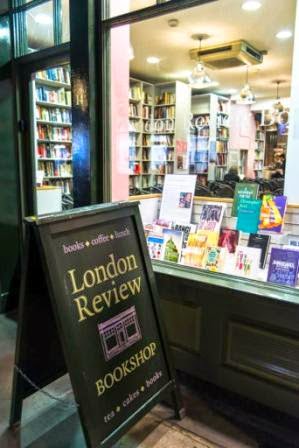
These two questions are posed on the flyleaf of Philip Marsden’s most recent book, Rising Ground. His book also lent its title to an interesting event which I attended at the London Review Bookshop last Tuesday. Rising Ground – Place Writing Now brought together Philip Marsden and two other writers, Ken Worpole, and my friend, Julian Hoffman, in a discussion chaired by the Whitechapel Gallery’s Film Curator, Gareth Evans, to unfold the question – what is place?

http://philipmarsden.co.uk/books.html
“Writing about place,” is, according to the event blurb, “a sub-genre of travel writing that subverts it by being about staying put, rather than moving.” It was a fascinating evening which certainly helped broaden the horizons of the mind. Each of the three writers was in agreement that the idea of place is intrinsically linked to perception. In using the framing device of place there is a clear distinction between knowledge and experience. We might know a particular landscape as intimately as another person in the detailed terms of its geography, its topography, its history, or how it might have changed or been changed over time, but that other person may well have had a radically divergent experience of that same place to our own.

http://julianhoffman.wordpress.com/the-small-heart-of-things/
As Julian Hoffman writes in his book, The Small Heart of Things --- “Place has a profound bearing upon our lives, from the countries we are born into, or end up inhabiting, to the light, landscape, and weather peculiar to our home regions. Each has a say in shaping our cultures and souls.” Our relationships to the places we inhabit or simply pass through can be deepened through ‘an equality of perception’ if we only stop ourselves and take a moment to examine it – perceptions small and fleeting can be just as significant to us as grand vistas and imposing, centuries old scenery. Awareness is the key, as Hoffman goes on to recount: “One autumn, while putting the shopping in the bed of our truck, I watched a kestrel arrow low over the supermarket car park, snatch a small mammal from an abandoned lot piled high with rubble and debris, and settle on a hummock of broken concrete beneath a streetlamp to feed. It was so close that I could make out the black fretwork on its cinnamon back, and our eyes locked together when its head suddenly swivelled. Shoppers pushed their trolleys past me, and I could hear the slam of closing doors, but I was so caught up in the eyes of the kestrel that I just stood there with a bag dangling from my hand.”

http://www.worpole.net/index.html
Each of the three writers spoke about particular places they have come to know and explored intimately, which they have then gone on to write about. For each, the motivations and modes of perception may have been different yet all three were deeply rooted in the concept of being at home. In this context, Hoffman’s favourite idea expressed in the words of the poet, Rainer Maria Rilke, that “everything beckons us to perceive it,” was frequently quoted and referred back to by each of the writers in relation to their own work and experiences with regard to place. For Marsden it is a personal search for the spirit of place; for Hoffman it is about being at home in a beckoning world; and, for Worpole it is about questioning received opinions, and, in so doing, forming our own ‘re-representations’ of what a particular landscape is, or represents, to us personally.  

Philip Marsden’s most recent book, Rising Ground, very interestingly for me (although I’ve yet to read the whole book) explores the wider locales around his home in Cornwall. Leafing through the book I can see many references to places both widely known and more obscure which are very well known to me having grown up during long childhood summers spent in that particular county. It will be interesting to see how different or coincident my experiences of these places will measure against his own. Julian Hoffman’s wonderfully lyrical book looks at his adopted home in Greece by the Prespa Lakes, located in a transnational boundary park whose shores are also shared by Albania and the former Yugoslav Republic of Macedonia – with all the complicated cultural history and diversity that such human imposed national boundaries have brought to bear on the everyday lives of those people sharing a home and a personal heritage in that locale. Ken Worpole’s most recent book, The New English Landscape, is a collaboration with the photographer, Joseph Orton, which proposes a new paradigm for topographical beauty based on the post-industrial landscape of the Thames estuary, another part of the world closely connected to me as I now live only a few yards away from the banks of this great river.

http://www.rachellichtenstein.com/content/rodinskys-room
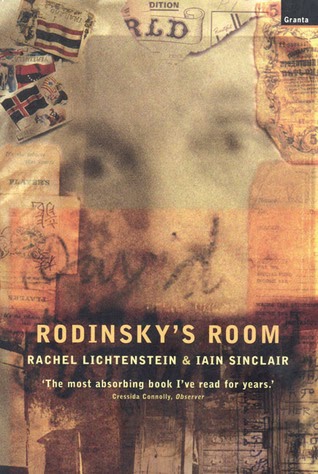
There are many ways to experience and to describe place. Personal response is one means; another might be through the stories of other people, of which the writings of Rachel Lichtenstein were cited as a foremost example. Indeed, her Rodinsky’s Room (written with Iain Sinclair) is a fascinating book – mysterious and moving by turns, in the narrative arc of her investigations into the remnant world of one man’s vacant home, still filled after many undisturbed years with all his abandoned possessions. A thoughtful exploration, forlorn but ultimately uplifting in its sifting through the accumulated layers of perception, projection, and the consequent misconceptions which seemed to have accrued through time, until person and place are ultimately, in several senses of the word, – relocated.

As Philip Marsden noted there can be ‘a cacophony of interpretation’ which builds through time in relation to particular landscapes. These can be both positive and negative. Whether it be a depressive dismissal of a decaying post-industrial landscape, or the idealised projections through which an unknowable Neolithic landscape might evocatively enter and captivate our imagination, or vice versa – these surmises probably say more about us and the nature of ourselves than the true essence of such a landscape itself.

http://www.londonreviewbookshop.co.uk/
Writing about place can be a means of ‘digging in and putting down roots,’ or it can be about looking back after displacement and viewing the place from which we’ve come with eyes renewed; our reflections become refracted, lingering resonances reverberating in unexpected ways – we may even end up feeling closer to the place we’ve left simply because we’ve left it. In this sense, opening yourself to a new way of perceiving somewhere – ‘unfolding place’ – is a renewed way of experiencing it. As Ken Worpole observed, accepting a ‘cookie cut’ notion of what a place is like merely on the say-so of other people is simply a way of denying ourselves our own experiences, and thereby depriving ourselves of our own intuitive responses, which – if we stopped to examine them – may well be surprisingly different to those of the hive mind. Rural and urban spaces need not necessarily be seen in opposition or viewed as enemies of one another. They may even be closer (physically) and more closely interlinked (on multiple levels) than we realise; by putting ourselves (physically and mentally) in motion we can exchange one for the other more completely than we might otherwise have assumed. 

http://www.londonreviewbookshop.co.uk/events/2014/11/rising-ground-place-writing-now


Just as those living transient lifestyles in a constant state of motion – such as hunter-gatherer communities, or nomadic shepherds, who continually relocate and renew their home-bases, and so are seen to be idyllic, happy, and at ease in their landscapes, whereas sedentary farmers are said to hate the land which they feel chained to – so we can see how perceptions of place drawn from outside and inside can differ and perhaps are not so clearly cut after all. Just as landscapes can bleed gradually, one into another, so too can our perceptions of place, as well as other people, and our own individual and collective locations within these landscapes which we have shaped into being as the places which we inhabit – the world around us, which we call our own whilst simultaneously sharing it with others.

http://www.londonreviewbookshop.co.uk/
 

Rising Ground – Place Writing Now at the London Review Bookshop, well attended with many thoughtful questions and observations from the audience, was a thought provoking and enjoyable evening. One which certainly made me see the world rather differently than I perhaps had done so before. I’m sure the thoughts and ideas which this evening inspired in me, and which I’ve tried to capture here, will linger long in mulling, and so permeate into my own perceptions of place renewed. 


http://www.londonreviewbookshop.co.uk/


See 'Person & Place' for my review of a similarly themed event on 'Capturing a Sense of Place' with the writers Mahesh Rao, Colin Thubron & Tracy Chevalier at Daunt Books earlier this year.