Life under “Lockdown” – A
London Diary #6
Sometimes I don’t know whether to
laugh or cry. Especially this year. It’s been the strangest of years for all of
us. Normal life has been derailed or re-routed so comprehensively that none of
us seem to have any idea where we are heading anymore. Earlier in the year I
decided to write a post here on Waymarks with some personal reflections during
the first ‘lockdown’ – inspired mainly by having taken part in this year’s Mass Observation project. It seemed like an unprecedented moment – at least, unprecedented
in my lifetime at any rate. I did so because I thought such thoughts would be
interesting to look back upon one day, hopefully many years hence, when all of
this – our on-going predicament – will be a dim and distant memory. A kind of
diary, personal thoughts written at the time, of an unforeseen national and
global disaster.
In Britain the uncertainty has perhaps
only been compounded by the additional (and unendingly circular) uncertainties
of the on-going Brexit negotiations. Like many people, the predominant emotions
I have felt this year have been: disbelief, confusion, powerlessness, despair, frustration,
incredulousness, hilarity, cynicism (on a repeating loop cycle). In short, it
has been a rollercoaster ride which has felt mostly sickening and not at all
exhilarating. It’s also been a rollercoaster ride which never seems to end.
Just as we get to a slower, less bumpy section of the track it suddenly starts
to climb steeply or plunge once again at a perilously precipitous rate. I want
to get off. We all want to get off. We’ve had enough. But no. We are powerless.
And now Christmas has been cancelled. We’re stuck in a perpetual state of ‘lockdown’,
though the ever-changing and hence unfathomable rules which apply seem
geographically nonsensical. Europe and many parts of the world have closed
their borders with us. We’re going to run out of food, hence panic buying apparently
is (and isn’t) back, and the value of the pound is going to leap off a cliff on
January 1st, and yet there’s nothing that can be done about it. As I
said, I don’t know whether to laugh or cry.

Humour is a very British way of
dealing with trauma, crisis, despair, etc. But it is a cultural trait which
doesn’t always translate very well, even to ourselves at times. We currently
have a Prime Minister who has built himself a professional-persona which is
based entirely upon a very particular kind of English humour: the
loveable eccentric, the daft buffoon, the over-grown school boy, a Billy
Bunter-esque type of charm. But when things get tough his demeanour and his
antics simply baffle everyone. Some problems and difficulties can’t be laughed
off. Perhaps rather paradoxically, we’ve been told he idolises Winston
Churchill, and so he sees himself as some sort of Churchillian statesman-like successor.
I’ve certainly seen many people saying in all seriousness that, in this country’s
present hour of need, as with Churchill before him, “Cometh the hour, cometh
the man!” I’ve laughed at this – not because I think it’s funny – but because
hilarity is often the best and most natural response to incredulity. I don’t
envy the Prime Minister his current lot. He undoubtedly has a difficult job on
his hands. But part of those difficulties, arguably, were of his own making
(Brexit), while the other half (the pandemic) very definitely wasn’t, at least
at its start. The Government may well have handled all of it in a manner which
is either: valiant/incompetent, or well-meaning/self-serving, doing the best
they can/making it up as they go along, informed by experts/guided by cronyism,
etc., etc. The list of perspectives goes on and you can choose your side for
any number of personal reasons or motives, deriving your ‘facts’ from whichever
source you feel most comfortable accepting as true. But none of it seems to
change the status quo. And at present I can’t see how anything can possibly
change for the better.
I’m now finding it hard to laugh
even incredulously. Instead, I have found myself beginning to review how I have
framed my own outlook, not just over the course of this year, but over the
course of my entire lifetime. I have grown up with (what I’ve always assumed to
be) a healthy sense of scepticism, a distrust of Government (both Right and
Left), and a wariness of bias in the Press and mainstream Media. But this year
I have felt like whatever anchors I have hitherto relied upon have been ripped
from the seabed and I am now wholly adrift. I’ve become so cynical that my
cynicism has revolved full circle and I’m now cynical of my own cynicism, or to
put it slightly less tautologously – I no longer like my own thoughts,
or feel at ease with my own way of thinking. And this is because I am now so
confused that I no longer know what to think, who to trust, what
to believe, who to listen to, or what to feel … I just want it
all to stop. It’s not that I’ve had enough, it’s more that I no longer know how
to respond. I feel like an inflatable punch-bag whose slow puncture has reached
equilibrium. The air pressure inside and outside has equalised, and I am now
just a flaccid bag half-filled with a lingering stale second-hand sort of air.
I am a broken sparring-device which is being kicked and punched back and forth,
bouncing off all sides of the boxing ring. I am spent.

So, what is to be done? – “Keep
calm and carry on!” – those motivational posters from WW2, which have had a
resurgence in popularity in recent years (I’ve lost count of how many times I
have seen them pinned up on the walls of shops, workplaces, homes, Facebook
pages, etc.), their ubiquity has now seemingly long since lost its knowingly ‘self-aware’
sense of irony. I never liked its reappropriation in the first place. Archly
nostalgic. I only ever found it half-funny at best, but I understood the
intentions behind it because I’m British and I ‘get’ the intrinsic cultural
nuances it seeks to convey on multiple levels. But reflecting on this
phenomenon in other contexts has set me thinking along broader avenues of
themes concerning cultural appropriation, re-appropriation, reinterpretation,
assumptions, sensitivities, reclamation, etc., and above all humour and
how it translates, and, perhaps more importantly, how it does not
translate.

Last month I was asked to
contribute my perspective upon race to an initiative titled the Engaging Race
Project, which is being led by Dr Amy Matthewson, SOAS, University of
London (see here). Various individuals of widely different backgrounds have and
are continuing to contribute their own personal thoughts and experiences of how
‘race’ has affected them and shaped their lives. It makes for a fascinating
poly-vocal examination of issues which are pertinent to all, but uniquely diverse
according to each individual’s personal take or experience of it. Reflecting
upon such things shows us that individual responses complicate our ideas of
right and wrong. It is not always easy to determine binary conclusions. Morally
and ethically, we need to engage more with multiple perspectives in order to
find our common ground. And this fact could not be more starkly apparent in
these deeply polarised and polarising times. Particularly in our responses to
issues which are bigger than us as individuals, such as the current pandemic,
Brexit, climate change, the struggle for equality, the widening social divide
created by wealth vs. poverty, etc.
These may seem or feel like
unprecedented times, but I think that’s not true. We oscillate on a social
spectrum wherever our society sits on a globalised scale. There’s a lot of talk
about how political populism is skewing or skewering our democracies, polarising
us into seemingly irreconcilable, opposing camps. Albert Camus, George Orwell, and
even Michel Foucault are all quoted, and/or mis-quoted, amidst increasingly partisan
screams of this or that being ‘fake news’, ‘conspiracy theories’, ‘truth or
reality denying’ tropes all devised to suit personal means and ends. We are
living in the age of “me and mine”, “I’m alright jack, you get off of my back”,
it’s every man, woman and child for themselves, and to hell with the rest of
you! – What has happened to that noble idea of “strength through diversity”, “many
hands make light work”, many minds working together, seeing through several
eyes to broaden our outlook and better inform our views?
Such notions, sadly, seem too noble
for these times. It feels almost as though we deliberately want to misunderstand
each other in order to bolster ourselves and our own sense that we are right
and all others are wrong. We’ve atomised ourselves. But I don’t think this is
anything new – vide the writings of Orwell and Camus. ‘Twas ever thus,
it seems. But I think it’s an awareness of how we might be being
manipulated which is the hardest thing to grasp these days, and this is where I
come back to humour – which I fear is often culturally the most impossible
thing to translate of all.

Humour is a great leveller, and a
great unifier. It can unite us through a shared sense of humility, especially
if we are able to laugh at ourselves and show others that we don’t take ourselves
(or them as well for that matter) too seriously. But humour is also a great
weapon – there are so many stories of how jokes which were told about Stalin or
the totalitarian system in the Soviet Union could get you sent to the gulag or worse,
get you killed. For all their seemingly iron-fisted grip on power all dictators
who fear people telling jokes about them ultimately seem so fragile once they
are removed from their god-like positions of power, because, unlike anything
else, humour can undermine and erode the twin systems of extreme fear and blind
belief which are but the smoke and mirrors that prop them up – the essays of
Vaclav Havel illustrate this all too clearly and are perhaps just as crucially worth
re-reading alongside Camus and Orwell today.
Yet humour can also be
misunderstood, misinterpreted, and cause harm where none was actually meant.
Anyone who has had any experience of cross-cultural relations should know and
heed this fact well. Even though experience only ever reaffirms and reinforces
it for those of us who do cross cultural divides in either our work or our home
lives, it is something which we often forget or overlook inadvertently because
we are all so deeply culturally engrained in our own worlds and our own
worldviews. We cannot help it. To give a seemingly flippant but perhaps more
widely accessible example of this I’d point to Bill Murray’s character in the
movie Lost in Translation. This is a Hollywood film, directed by Sophia
Coppola, which is much beloved and often thought of with real affection and whimsical
humour among Anglo-American movie-goers. I know many people who cite it as one
of their favourite films. I also know other people who find it an uncomfortable
movie to watch. How you view it, as with anything in life – especially jokes –
all boils down to your own personal perspective. I find Lost in Translation
a fascinating movie, especially from the point of view of my own changing
perspective upon it through time.

I first saw Lost in Translation
soon after it came out around 2003-2004, almost immediately after my second prolonged
visit to Japan over that New Year’s transition. I know a lot of people in
Europe and America found it a very fresh and rather un-Hollywood-like
depiction of Japan. It seemed more grounded in a real Japan which (up until
then) we rarely ever got to see on our TV and movie screens. It was funny too,
because it lampooned that acute discombobulation which anyone who has travelled
to a place where the culture and language seem so utterly different and
incomprehensible to our own. Picture Bill Murray, a man experiencing some sort
of internalised existential crisis, sitting in his hotel room dressed in a funny,
ill-fitting nightie (yukata) and slippers. He’s playing an actor who is there
to film a TV commercial for a famous Japanese brand of whisky: “For relaxing
times, make it Suntory time.” The director gives a great long and emotionally
emphatic speech as to how he wants Murray to say his lines. Murray looks to the
translator and she simply states the director’s intentions in a scant four or
five words. Bill Murray is baffled: “No, what did he really say? He clearly
said more than that!” – We laugh at this because of the interplay of
stereotypes which we think we can all recognise in this situation. The movie
seems to oscillate delicately between two poles – one of humour and the other
of pathos – which is perhaps poignantly summed up by the movie’s title, as both
Bill Murray and Scarlett Johansson’s character’s lives are lost in
some sort of unspoken search for self-meaning.

When I first saw the movie, I liked
it because it made me feel nostalgic for Tokyo and my two recent trips there.
At the time I thought these might be once in a lifetime trips, but in fact they
were the first of many, and now Tokyo is a place I can call home. A fact which
I never would have dreamed of when I first saw Lost in Translation in
the cinema in London. I didn’t speak Japanese back then either, so unknowingly
I read the movie on one level only, relating it to my recent and very personal
experiences. I was surprised to later find that some of my Japanese friends really
disliked the movie. And so, several years later, after I’d become much better
acquainted with the country, the culture, and the language, I watched it again.
I was rather shocked at how I read the movie afresh from two angles. Because
now I realised how my first reading of it had been firmly rooted in the humour
of my own Anglo-American culture. That stereotypical scene with the movie
director was so over-the-top that I thought it made its point through
exaggeration (the director does just say the same thing in several different
ways over and over) and that this would be just as translatable as anyone
playing a hammed-up English eccentric might be in any other typically Hollywood
movie. Stereotypes are just that after all, we’re meant to laugh at them, not
necessarily take them to be generically definitive, as with all stereotypes they
are an affected exaggeration of the truth. So my initial response to re-watching
this scene was to think my Japanese friends were being a little over-sensitive,
although I could see and understand and so feel sympathetic as to why it might
cause them offense. English eccentric stereotypes in Hollywood movies have
ruckled my pride on some occasions too.

But it was later scenes in the
movie, when Bill Murray and Scarlett Johansson are in the hospital, which made
me realise why some of my Japanese friends found this movie so uncomfortable.
I had read somewhere at the time when the movie first came out that these
scenes were largely improvised, which was highly unusual for a Hollywood movie
at the time. People said this is what made it feel so different, made it feel
more real and more realistic, and so perhaps more relatable. And again, these
scenes play upon that idea of things being ‘lost in translation’, finding
yourself in a situation where you can’t understand or make yourself understood,
so you flail about amiably trying to stay afloat, seeing the funny side of it
all, and falling back on your sense of humour to see you through. And most
importantly, at this point the film gives us no subtitles to translate
what the fellow patients (who apparently are ordinary Japanese and not actors)
are trying to say to Murray and Johansson. We aren’t given subtitles because we
are meant to be seeing it from Murray and Johansson’s characters’ point
of view – but if you can understand Japanese these scenes are really painful to
watch because the Japanese characters are clearly trying to be kind and are empathising
with the two Westerners, struggling to make themselves understood and not fully
understanding why Murray and Johansson are larking about and are laughing at
them in response. Here is a clear example of how humour and only seeing
one side of a conversation can hurt and divide us, even if that wasn’t the
intention of the person acting the fool.
I’m not saying we should all strive
to be more serious. I still think humour is a great leveller, and I think it is
a great weapon against oppressive or overreaching power, but it’s much harder
to remember that humour can so easily be misconstrued, misunderstood, and/or
seem to malign our own harmless intentions. Our worlds as individuals
interacting in the greater social collectives through which we move or are
embedded, are ever in constant danger of derailing us or those around us from
making the connections which keep us sane and smiling, which help smooth the way
or aid us in sorting out the ills which have inadvertently arisen between us. I
make such cross-cultural faux pas all the time, and when I do, I can’t
help feeling them all the more acutely for knowing I should be more mindful and
more careful for having made such mistakes before. The lessons of forgetting are
that we constantly need to relearn and relearn and relearn again the things
which we already know and should have remembered. That’s life. It’s
not the end of the world. But it’s something for us to improve upon. Because,
ultimately, I’d much rather laugh and laugh together rather than cry or get
angry about something which is simply a misunderstanding or a different
perspective compared to my own. Life’s too short otherwise.
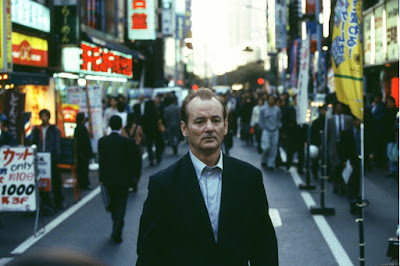
At the moment I feel like the world
and the UK in particular is very much ‘lost in translation.’ Not just to those
beyond our borders, but to ourselves as well. Boris may be a hopeless and a
hapless buffoon, or he may well be a sinister and coldly-calculating clown (he
may even be your latter-day Saint Winston Churchill!), but his past form makes
it very difficult to comprehend him, let a lone take him seriously or trust him.
He may well be ill-advised, or the indecision he seems to excel at maybe his
own character flaw, but if we in the UK can’t understand him –
how can we expect the rest of the world to understand him? I’d like to think
our Prime Ministers should represent the best of us, and that they should
always be seeking the best for us, but I know the reality is never quite
so simple or straightforward. At the moment, as a divided nation, we seem to be
morally bankrupt. Hemmed in by the biases of the news and the opinions we are
fed by the Press and Social Media channels we choose and advocate to inform us
and to trammel the way we think. Unusually we used to be able to laugh at our
leaders’ faults and inadequacies, but that’s not possible at the moment because
we are constantly being corralled into our partisan groups, opposed to one
another to the bitter end.
Given the enormity of the
challenges which we currently face, and the Merry-Go-Round circus ride of f*ck
ups and failures we’ve witnessed as the crises of the last few years and 2020
in particular have deepened our situation, I’m beginning to think neither side
should be given total control over such matters. Perhaps we’d get a sense that
the rudder was being held more firmly if there were more cross-Parliamentary
consultation and pooling of expertise to make decisions which are better
informed, more balanced and more representative in order to find some way of
progressing together as one? – I realise this might seem absurdly idealistic,
but wasn’t this more like what happened in Parliament during the last World
War? – If that’s the nostalgic kind of Britain people want to go back to
perhaps it’s time to stop kidding ourselves as to what we think it was like
back then during Britain’s “great glory days” on both sides of the current political
divide, if only because I think we have reached the point where it is very
genuinely and very worryingly no longer a laughing matter.

Also on 'Waymarks'
Life Under "Lockdown" - A London Diary
The Proust Questionnaire ...
Castaways in the Time of Corona
Falling Like Dominoes ...
The Singularity of Arthur C. Clarke
~
Engaging Race Project


 Fronting
the lake on the opposite shore is the Grand Hotel Toplice. Founded in 1850 as
the Hotel Luisenbad, it was a popular destination for the Austro-Hungarian
elite and wealthy foreign travellers. In 1918 it was given its current name,
and extensively renovated in 1931. It was a favourite alpine resort of both
King Alexander I of Yugoslavia, who was assassinated in France in 1934, and of
Marshal Tito, who ruled communist Yugoslavia from 1953 to 1980. Other noted
guests have included famous literary figures, such as Pablo Neruda, Arthur
Miller, and Agatha Christie. We added our names to this vicarious roster by stopping
here for afternoon tea in the hotel lounge, which has a gorgeous view of the lake
and still has a quaint, old-world sort of charm which makes you feel like you’ve
stepped back into a former age. The main culinary speciality which Bled is best
known for is kremna rezina or kremšnita, a cream-filled pastry,
the current recipe for which was devised in the hotel’s patisserie in the
1950s, although such local specialty cream pastries are said to date back to
the Hapsburg era.
Fronting
the lake on the opposite shore is the Grand Hotel Toplice. Founded in 1850 as
the Hotel Luisenbad, it was a popular destination for the Austro-Hungarian
elite and wealthy foreign travellers. In 1918 it was given its current name,
and extensively renovated in 1931. It was a favourite alpine resort of both
King Alexander I of Yugoslavia, who was assassinated in France in 1934, and of
Marshal Tito, who ruled communist Yugoslavia from 1953 to 1980. Other noted
guests have included famous literary figures, such as Pablo Neruda, Arthur
Miller, and Agatha Christie. We added our names to this vicarious roster by stopping
here for afternoon tea in the hotel lounge, which has a gorgeous view of the lake
and still has a quaint, old-world sort of charm which makes you feel like you’ve
stepped back into a former age. The main culinary speciality which Bled is best
known for is kremna rezina or kremšnita, a cream-filled pastry,
the current recipe for which was devised in the hotel’s patisserie in the
1950s, although such local specialty cream pastries are said to date back to
the Hapsburg era.


