22 September 2016

Haw Par Villa - Singapore


“We have to go here. This is a place you simply must see. It’s hilarious!”

Gingerly clicking on the link my colleague had sent me, I wasn’t so sure. 

Even as we approached the main gate several weeks later, I still wasn’t so sure. But I was certainly curious enough to give it a look, and the rest of my colleagues were game. Happily, entrance is free - so with plenty of time to kill, we’d nothing to lose …

It turns out he was right. It is so bizarre you really do have to see it to believe it. Initial impressions weren’t great, I have to admit. The prospect of seeing a run-down park filled with oddly artless concrete sculptures wasn’t an altogether edifying one. But seeing is believing, and you really do have to see this place to believe it. 

http://www.tigerbalm.com/uk


https://en.wikipedia.org/wiki/File:Hu_Wenhu2.jpg
Built in 1937 Haw Par Villa in Singapore was once the family estate of the Aw brothers. Their father, Aw Chu Kin, was the creator of the famous ‘cure-all’ ointment known as Tiger Balm. It’s a kind of cross between Deep Heat and Vicks Vaporub, mildly anaesthetic with a comforting sort of eucalyptus scent (it’s very good for easing muscle aches). Originally the brothers, Boon Haw and Boon Par, after whom the Villa was named, used the fortune they made from Tiger Balm to set up a zoo in the Villa’s grounds (the park was originally one of three set up to promote Tiger Balm, the other two being in Hong Kong [now closed] and Fujian in China). A later change in the licensing laws of the colony compelled the brothers to replace the animals with a bizarre menagerie of statues instead, many of which are arranged in static-theatrical tableaux which range widely across a spectrum spanning the deeply moralistic to the outright surreal.  Many of the set-pieces illustrate episodes from Chinese folklore and Taoist mythology, such as the titanic battle of the Eight Immortals. A very dilapidated little hall made up to resemble a winding cave-like tunnel passing through a small cement-rendered mountain houses the ‘Ten Courts of Hell,’ where amateurish dioramas illustrate extremely gory scenes of wicked prostitutes being drowned in the “filthy blood pool”, or where ‘tax dodgers and late rent payers’ are pounded with mallets – it’s not quite Hieronymus Bosch, think rather of the ‘London Dungeon’ meets ‘Bekonscott Model Village.’ 


It’s disturbingly naff. Hence at this point I still wasn’t sufficiently impressed enough to take any snaps, but emerging into the daylight again things began to alter and shift as we progressed up the hill. 

The dioramas began to grow in size, and whilst some were in distinctly neglected crumbling states with peeling paint (it was hard not to think of a forlorn forgotten seaside town, or some other such ruined dystopia, the original for Banksy’s Dismaland perhaps), others had been or were in the process of being patched and tarted up again with fresh licks of paint. 

Some of these concrete creations were truly stunning and discombobulating in equal measure. A couple of scenes had me roaring out loud with laughter and that was it – the odd magic of the park had set in. I now had the giggles. 

It was like wandering around in our own half-deserted version of Miyazaki’s Spirited Away, a tropical Margate gone hideously wrong … My colleague was right, it was curiously hilarious.

I got my camera out and began snapping ... 


22 August 2016

Reading George Orwell


http://granta.com/wp-content/uploads/2011/01/George-Orwell.jpg
I’ve only read three books by George Orwell, and they’re not the three most people probably associate with his name. He is, perhaps like Shakespeare, one of those writers whom we somehow simply know and can even quote without ever actually having read. I’m not entirely sure if that is a good thing or a bad thing, but it certainly is a thing.

I may well have read a passage or two from Animal Farm (1945) in English classes at High School, but I’ve never read it all. Nor have I read Nineteen Eighty-Four (1949). But somehow I can’t seem to recall my ever not knowing about this satirical tale of animals as political allegory for Stalinist dictatorship. All animals are equal but some animals are more equal than others. Likewise the “newspeak”, “doublethink”, “thoughtcrime”, and “Room 101” of Nineteen Eighty-Four. Big brother is watching you. But thinking about Orwell recently I was struck by the realisation that I’d never really engaged with his works. What seemed strange to me is how in many ways, and considering what little I know of him and his life, he would most fundamentally seem to be my kind of writer. As a Sixth Form and then undergraduate student in my late teens and early twenties I avidly read the political writings of Mahatma Gandhi, Albert Camus, Vaclav Havel, and later, Aung San Suu Kyi. I also read the complete short fiction and personal writings of Franz Kafka. But not so much of Orwell.

The first book of his I read was Down and Out in Paris and London (1933). For a time I contemplated writing my undergraduate anthropology dissertation on some vague aspect or other of homelessness in London society. When not in lectures I often idly drifted about London and occasionally found myself engaging in conversations with various ‘down and outs’ I met on the streets. But nothing came of it, perhaps because I realised to do such a study properly would take more time and greater immersion than would be possible in the timeframe required of an undergraduate dissertation project (plus, asides from the question of what might be the most appropriate methodology; how to ethically reconcile oneself with pursuing “participant observation” of such a topic, as was required of the dissertation module? Should one pose as homeless in pursuit of veracity by being dishonest, or should one be open about being an academic observer, thereby maintaining honesty but creating a barrier through distance?).

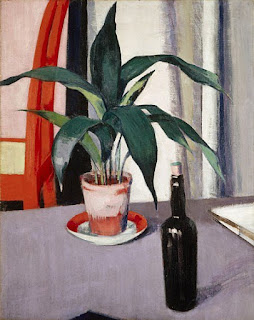
https://www.nationalgalleries.org/collection/artists-a-z/c/artist/f-c-b-cadell/object/aspidistra-and-bottle-on-table-gma-3351
In many ways I now regret not doing that project, comparing Orwell’s observations of London’s homeless with my own of some fifty-odd years later might have been a worthwhile endeavour. But my head was probably too much in the clouds at the time, I doubt I’d have been organised or disciplined enough to have done it justice. Instead I gravitated onto his novel, Keep the Aspidistra Flying (1936), which chimed more with my own somewhat lazy artistic counter-culture inclinations – the story of Gordon Comstock, a not-very-good poet nurturing a slowly simmering rancour against the world and society in particular, which resulted in his busily being determined to go nowhere with his life. A kind of über-Romantic anti-Romantic. But happily, that didn’t last quite as long as it felt like it did at the time. Life eventually moved on.

And as life moved on, so too I seemed to leave Orwell behind. It’s only recently that I came back to him. This time drawn by an interest in his anti-imperialist writings which I thought might chime with elements of my current PhD research. But there again, how was it that I already seemed preternaturally aware of his essay, Shooting an Elephant (1936). Racking my brains I have no recall of how, when, or where I first became aware of this remarkable piece of writing. Somehow, I just knew about it already.


Hence I bought a copy of his Essays (2014). A gorgeously produced Penguin paperback with a design that harked back to the iconic 1940s-look of that publishing brand. Rather suitably, I thought. But inside the text has been reduced to fit this pocket-sized format, which means that trying to read the thing is rather like trying to decipher the semaphore of an ant attempting to communicate by dancing across a narrow blank page with inky feet. However, that screwed-up-eyes intensity of reading repays the effort well. I found Orwell just as engaging, if not moreso even, than I did when I was half the age I am today. 

http://www.etcetera.com.mx/ckfinder/files/images/ORWELL-1.jpg


I realise now the main thing I like about his writing, asides from my sympathies with some of his viewpoints and shared interests in certain topics, is how clear and frank he is – without necessarily being simply clear and frank. It’s hard to explain what I mean by this, and that’s perhaps why he’s such a master prose-stylist. He does it so effortlessly. Although, I bet he did and didn’t. I bet he laboured long over some parts whilst others must have just poured out and seemingly wrote themselves. Maybe this is why he seems oddly timeless. While he might be writing about times and realities which have long since gone and which in many ways set his writings firmly in the context of their times – he writes of pounds, shillings, and pence; his weights and measures are imperial, he writes about drinking pints of mild, and buying so many ounces of tobacco, to point to the simplest of examples – he also writes very plainly about some topics which seem oddly open and thereby counter to my preconceptions of the era; take sex for instance, he can be remarkably candid about that – although, thankfully, not too candid.

The social and moral observations he makes and his analysis of such matters are what perhaps resonate most with the modern reader, even now. It’s amazing he remains so fresh and seemingly current, but then maybe he has simply hit on the most unchanging elements of our reality. Perhaps the world, as he sees and understands it, was ever thus. Like Ben Jonson’s famous summation of William Shakespeare, perhaps George Orwell is not so much a man of his time, but rather more a man for all time – or, to thieve a different aphorism (from Zhou Enlai), is it still too early yet to tell?


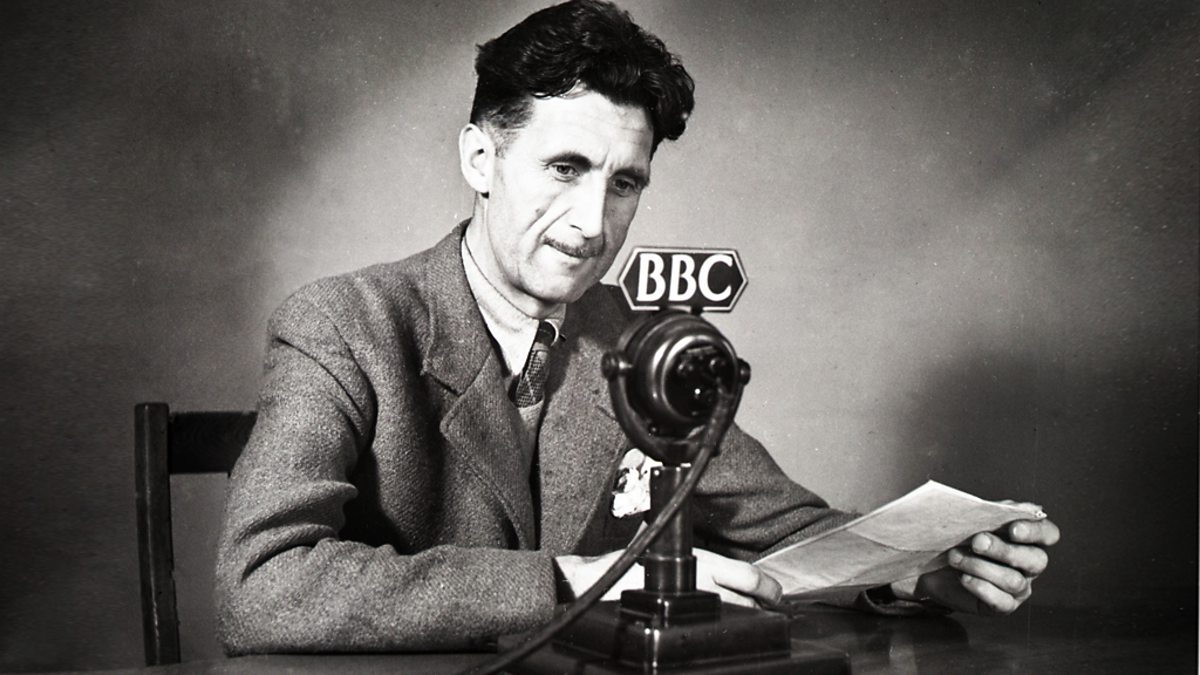
http://ichef.bbci.co.uk/images/ic/1200x675/p01hxmn8.jpg


A selection of BBC Radio 4 Programmes exploring the themes and political context of George Orwell's ideas and his writings