29 March 2014

'Person & Place' - The Essence of Good Travel Writing


http://www.dauntbooks.co.uk/files/13_sense_of_place.pdfYesterday I went to a wonderful event at the equally wonderful Daunt Books on London's Marylebone High Street. The event – titled ‘Capturing a Sense of Place’ – was the last of Daunt Books’ first two day ‘spring books festival,’ and the lovely old bookshop was crammed to the rafters with people who had come to hear a conversation between four very interesting writers. Mahesh Rao, a debut novelist who has written about the city of Mysore in India, where he currently lives; distinguished travel writer, Colin Thubron; celebrated historical novelist, Tracy Chevalier – author of Girl with a Pearl Earring, which was first launched at Daunt Books, were all in conversation with travel writer and historian, Barnaby Rogerson, who also runs the well known Eland imprint, which specialises in keeping great travel classics in print.

The conversation was a fascinating and insightful exchange in which all four writers spoke of their own notions of place and what makes for good descriptive writing in both fiction and non-fiction. Each seemed to agree that whilst fiction allows a greater freedom one’s descriptions of place need to be based in reality in order to be believable, and similarly in non-fiction too – particularly in travel writing – the ring of authenticity does more than make a descriptive passage simply credible, it need not be embellished or dramatised in order to make it evocative or informative. Indeed, as Colin Thubron noted not all aspects of travelling are necessarily that interesting – most journeys are characterised by long periods of tedium and boredom. Mahesh Rao commented that he thought this made the prospect of writing non-fiction, such as travel books, prohibitively daunting: “What if you go on a journey and nothing interesting happens to you?!” – That, Colin Thubron said, was the travel writer’s greatest fear: “Most people think a travel writer’s fears will be about the possible dangers of travel, but actually the greatest fear is that nothing dangerous will happen – at least if everything goes drastically wrong you’ll have lots to write about!” However, even the tedium and the boredom have their place too. Thubron cited how a stagnant and unproductive month in China was condensed in one of his books into a couple of paragraphs, the trick is knowing how to balance this properly within the narrative – you don’t want to bore the reader, but you still need to give them a sense of that reality which makes for genuine authenticity.

Tracy Chevalier made several interesting points. Firstly, how she thought we all have a tendency to “anecdotalise” our lives – essentially we all tell stories based on our experiences. She gave the example of how we tell stories about things which happened to us whilst we were on holiday and how in subsequent retellings we will instinctively trim the edges and tidy the parts which didn’t work or lessened the impact, and in that sense we begin to shape our own stories – good writing is much the same, it’s a process of honing a story or a telling of something personal into its most affective essentials. For her – she said – she thought good travel writing was all about finding the right mix of “person and place.” The other writers on the panel all agreed. A good travel writer needs to convey something of themselves, their personalities, and their responses to the places in which they find themselves and which they are describing in their prose. Colin Thubron gave the example of how when he began writing “as a younger and perhaps less confident man” he chose to write about small places essentially because he felt he needed to know all about them first and these were easier to research and read up on – yet later, when he ventured to take on bigger themes and bigger places, such as the Soviet Union and China, he realised that not knowing all about them could be part of that process of writing – it became more about journeys of discovery and feeling, rather than simply factual journeys of straight reportage – essentially a mix of the two tends to work best.

Each writer read an extract of their own work and an extract of a work which had resonated with or inspired them in some way. It was interesting to hear their choices and the conversation naturally progressed on to the idea of how travel writing has grown and evolved over time, how so many writers and publishers have long been announcing the demise of the genre, and yet its resilience seems to constantly keep it bouncing back. The panel were asked to speculate about the future of travel writing. The idea that travel writing was becoming less vital now that we can all travel, or, if not, we could all certainly access far away places on-line – ‘googling’ up images and footage of what these places look like rather than seeking out descriptions in travel books. Tracy Chevalier said she was concerned that the speculative demise of good travel writing would leave writers of the future without access to what we make of travel now, worrying (rather dismissively, I thought) that – “now that we can all write about our travels so instantly on-line” – such future writers would only have “personal blogs and Tripadvisor” to rely upon, and that largely there was “no good writing of that sort to be found on-line.” This was the only point of the conversation that I would take issue with – not simply because I write a blog about my own travels, naturally! – but because I think it is manifestly untrue. There is plenty of good writing being posted on-line both by established or emerging writers and ‘amateurs.’ And as a historian I’d say that such blogs and Tripadvisor, should they remain accessible, will become as useful as future source materials as the newspapers and popular press journals of the past are to us now. Future writers and historians will no doubt have the critical facility to sift and differentiate what’s valuable from what is less useful. Colin Thubron stated that he thought the greatest strength of the travel writing genre was its great adaptability, and that essentially it all came back to Tracy Chevalier’s point that good travel writing was all about finding that balance of “person and journey” – this was ultimately what shone through in the end, it’s what we all relate to in good travel writing, and therefore what makes it endure.

It was an excellent, thoughtful, and thought provoking conversation which made for a very enjoyable evening (accompanied by a very enjoyable glass of wine too!) – an excellent end to what looked like a great list of events. Hopefully it will be but the first of many such spring festivals at Daunt Books.

http://issuu.com/dauntbooks/docs/festival_programme_online__1_

22 March 2014

Reflections on Travel & Research


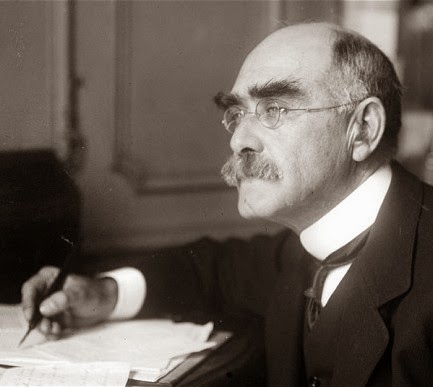
http://en.wikipedia.org/wiki/Rudyard_Kipling
Part X

“I would like to try to deal with some of the more intimate and personal aspects of travel. They may be trivial or absurd, but one must remember that in a few years, most of our existing methods of transport, together with the physical and mental emotions that accompany them, will be profoundly changed. The time is near when men will receive their normal impressions of a new country suddenly and in plan, not slowly and in perspective; when the most extreme distances will be brought within the compass of one week’s – one hundred and sixty-eight hours’ – travel; when the word ‘inaccessible’ as applied to any given spot on the surface of the globe will cease to have any meaning.”

These words were spoken a little over a hundred years ago by Rudyard Kipling (1865-1936) in an address to the Royal Geographical Society in London. The exact date was the evening of February 17th 1914.[1] When reading travel accounts from this era I’m often struck by how remarkably forward looking they are; something which is notably in contrast to similar travel accounts published in our own time, which often strike me as being rather more nostalgic. Perhaps it was a characteristic of the age of Western imperialism? Notions of modernity infusing a sense of purpose and a sense of faith in human progress. Boundaries were busily being pushed back. Frontiers were falling. The project of globalisation was proceeding apace. And now, in our own era, when that project has perhaps faltered or reached some sort of equilibrium, faced with newly dawning uncertainties, what else can we do but look back? [2]

http://en.wikipedia.org/wiki/File:James_Bryce,_1st_Viscount_Bryce_cph.3b16400.jpg
Commenting on Kipling’s talk that evening, Lord Bryce (1838-1922) – who was asked by Lord Curzon (1859-1929), the President of the RGS, to express the meeting’s thanks to Kipling – he continued the observation quoted above with which Kipling opened his talk: “If any of you are inclined to envy the men and women of the future who will be able, in the course of an afternoon to reach the United States, and South Africa to-morrow morning, and to wish that you had been born in those days, let us comfort ourselves with the thoughts that at those heights which the airships will traverse, there will be no colours of landscape to enjoy, for colour fades out of things when you pass over them at a height of 5000 or 6000 feet. Neither will any scents reach the future high-level travellers. So let us come back to the old conclusion that we may be well content with the world in which we live, even if it be not the best of all possible worlds.”

One can’t help wondering what Lord Bryce would have made of the realities of travelling long-haul economy class at 35,000 or 36,000 feet (!) today – with the blinds all pulled firmly down in accordance with the cabin staffs’ instructions, and everyone with headphones on, plugged into their TV sets and tucking into their in-flight meals, whilst assailed by the stifling dryness and the occasional odd aromas circulating in the recycled air of the closed cabin (Kipling’s talk had made a point of emphasising the evocative nature of smell as a distinctly remembered characteristic of travel). Perhaps this shows that some people a hundred years ago had a clearer vision of ‘human progress’ than others! I don’t suppose Lord Bryce would have been a fan of modern air travel – for all its gruelling convenience, how many of us in our hectic and evermore time-pressed lives can conceive of the same journey taken by steamer over weeks through both choppy seas and fine weather? How does our experiences of turbulence compare to a howling gale on the water? Or the spun body-clock of jetlag to the forced idleness of days spent in a cabin or strolling the promenade deck with nothing but a desolate expanse of water to meditate upon?

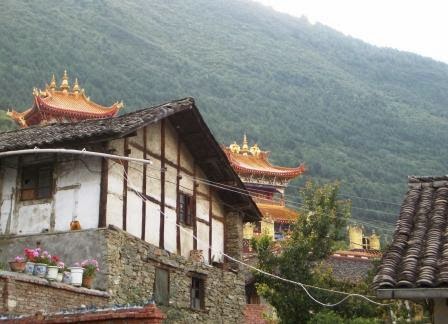
Travel is always an experience. Often travel is defined by its modes of transport as much as its duration, and by our company too – all these elements essentially combine. In the early 1990s I went on two separate student exchange trips to the newly re-unified Germany. For the first of these we travelled out from the UK overland by bus, for the second we flew. On the first we had a two day trip before we reached our destination in which to get to know one another better than we previously had in the normal day-to-day routines of our school life, and consequently it induced a tight knit camaraderie which transformed our subsequent stay in Germany. On the second exchange trip a few years later, which was made with a different group of students at a different school, we were very much flung instantly into our new situation overseas in a much more immediate and isolated sense as the flight lasted less than two hours. An hour in the departure hall wasn’t enough time to make us feel like the solid intrepid band which had been forged and united by the previous bus and ferry ride across the Channel and the autobahn to Germany. In a similar way my trip to 康定 Kangding (དར་རྩེ་མདོ། Dartsendo) was defined by the effort required to reach the town.

It took only a few hours to fly from Shanghai to Chengdu, but (on average) an eight hour bus ride out to Kangding and the same back again – a journey which a hundred years ago would have been made over a number of days and mostly on foot. Reaching Kangding really felt like reaching somewhere partly because of the effort required and partly because it is still quite an ‘out of the way’ sort of place, not quite altogether off the beaten track but still comparatively speaking fairly remote.


Here though, I was travelling alone. There were only a handful of other Westerners staying or living in Kangding. Most of the travellers (as we were all independent travellers rather than package tourists) were holed up at one of either two hostels, and a lot of these seemed to be just passing through or taking a couple of days’ break to catch up with laundry and internet. I spent a lot of time wandering around the town, with a sheaf of old photos printed out from my computer, trying to match old views to the present, seeking to orientate myself and get my bearings, piecing together an old version of Kangding which had long since been transformed, buried, or disappeared. Every now and then I’d find a former trace of that past place, and as such a little more of the history which I’d either heard or read about from family, or books or archives would fall into place. But reflecting on this now, it wasn’t so much the cliché of bringing history to life – it was more like a process of conjectural surveying and factual mapping. In my mind I was constantly pegging reference points and trying as best as I could to connect them together to form a clearer understanding. Continually stopping to remind myself that it was easy to make assumptions and that one should always qualify oneself with the thought that an idea or link could later prove incorrect or wrong. 


Trying to place the old French Catholic Church was a case in point. Having climbed a flank of one of the hillsides overlooking the town to a precarious vantage point I managed to convince myself that the location of the old church might well have been on the site of the present one (which on the face of things seemed logical enough) – yet later on it became apparent from carefully scrutinising another photographic source that the geography of that particular theory was probably all wrong; as such, seen from a different angle, the old church was more likely to have been situated on the other side of the river and further downstream (perhaps near where the modern town square or piazza is presently located?). As with a lot of these types of thing, it’s probably hard to ever be certain. 


Something I’ve yet to come across is any old, officially printed or even roughly sketched maps of the town’s former layout. But that’s the point of research, you never really give up – you keep looking, and you keep your mind open to revising your findings in the light of new discoveries. As with my last stroll along the Lu Ho Valley, there’s always the lure of that next bend in the road or rise on the horizon, tempting you ever forward, wondering what you might find just around the corner. The difficulty and perhaps the greatest sadness is deciding when to stop and draw a line. Maybe you’ll decide to keep travelling forever, or maybe others travelling with you or after you will take your journey further – but in the end, that is something which only time will tell.

Such journeys aren’t all about the past though. Our notions of history say as much about the present as they do about the reality of the past. It’s a fascinating angle to explore the here and now as much as it is to seek out the past. Chatting to Mr and Mrs Lao in their front room; or being welcomed in by Tibetan monks eager to practice their English with an interloping foreigner; or being hijacked and lead on a happy, whirlwind tour of a lamasery by some local children – for whom the lack of a shared language didn’t seem to be any sort of a barrier; or, similarly, being invited to take shelter from the mountain rain in a farmer’s house and managing to use my battered old Japanese/Chinese/English vocab’ book to communicate with him and his family over copious cups of hot tea and warm natured smiles. All of these experiences combined to make my own trip to Kangding a memorable and personally rewarding one. I found much more than I’d dared to expect travelling to Kangding, and, as such, I hope it will in time prove to be but the first of several – perhaps longer – trips yet to the town and the regions beyond.


This is the last in my series of posts on my 2010 research trip to Kangding (Dartsendo). I will occasionally write other posts related to my research, upon the lives of Rinchen Lhamo and Louis Magrath King, as well as the broader topic of my PhD which will be focussing on Western travellers in East Tibet in the early 20th century and the theme of ‘science and imperialism.’ These will all be listed and linked under the ‘research’ tab at the top of this blog. If anyone would like to post comments on the blog or contact me directly to discuss these topics or my research I’d be most grateful to hear from you.


[1] See: The Geographical Journal, Vol. XLIII, No. 4 (April, 1914), pp. 365-378
[2] I think there’s the germ of an idea for a paper waiting to be written here!