Showing posts with label Greece. Show all posts

8 December 2020

A Gentleman & A Scholar - Ian Jenkins

Dr Ian Jenkins OBE


I've just heard the very sad news that Dr Ian Jenkins OBE, Senior Curator in the Greek & Roman Dept. of the British Museum, passed away just over a week ago on Nov 28th.


Ian had lived valiantly with Parkinson’s disease for many years. I say ‘valiantly’ because it certainly never seemed to slow him down at all! – He was a genuinely dynamic individual, with one of the sharpest minds I have ever known. And to know and have the good fortune of spending time with him, chatting to him, was always a real pleasure. Always enlightening and amusing in equal measure. He'd always been very supportive of me since I first joined the Greek & Roman Dept. around 20 years ago, and I was lucky enough to continue working closely with him, as well as travelling the world together, with his 'Body Beautiful' exhibition, long after I'd left the Dept. We toured the ‘Body Beautiful’ exhibition in its various iterations over a period of almost ten years from China, Hong Kong, Taiwan, South Korea, and Japan, to the USA, Mexico, and Australia, as well as to Spain and Switzerland, before it opened in its final form at the BM itself. Throughout the tour he charmed, delighted, and enthralled all of the audiences he spoke to – his wit and intelligence when speaking publicly always seemed so effortless, yet his words let you in and gave you a glimpse through an acute eye which saw the world in a different light to most of the rest of us. He delighted in discovering unusual connections, and, as such, he could often confound you by revealing something so obvious that you couldn’t fathom why it had always gone unseen before. In that sense he was truly brilliant. To chat with Ian was to always have your mind-blown wide open – in a nice way! – Plus, he had a wicked sense of humour, and was an endless fount of funny and often highly irreverent stories. It’s a genuine truth to say that I am forever recounting his stories to friends. He may have left us, but I am sure that amongst his colleagues and his friends, his anecdotes and his bon mots will long live on hereafter.


Ian Jenkins speaking at the opening of 'Body Beautiful' in Australia in 2014


Ian was, of course, best known for his association with the Parthenon sculptures (and the controversial issues which surround their current location). Classical sculpture and architecture were his specialism, but the culture of modern museums, and academic-yet-accessible curating for a well-informed popular audience was his forte. He was one of those intellectuals who simply assumed you were just as well-informed as he was, and if you weren’t (and who was?!) – no matter – you soon absorbed the information he was imparting and took flight with him because it was simply too infectious not to! – In that sense, as a scholar, as a colleague, and as a friend, he was always generous with all that knowledge and experience which he possessed, he was always open, always had time for you, and, always was supportive.


I feel I was especially fortunate. He and I clicked hugely after I wrote a short piece for the BM Magazine in 2005 about John Keats and the possible sources of inspiration for Keats' Ode on a Grecian Urn - so much so, in fact, that he suggested we should co-author a book together about classical sculpture and harmony (with him writing about classical music, and me writing about Keats). I said we should perhaps give it a go once I'd finished writing my PhD, but sadly that will never happen now – life's too short.


He was over the moon though, when I very excitedly told him, several years after my article had come out, that, having done some research into my family tree, we'd discovered I had the joint family names of Keats and Jennings in my direct ancestry (Jennings being Keats' mother's maiden name), and so he was absolutely certain that this was a sign from the Gods, there must be some sort of mystical *cosmic connection* and that I must be related to the poet! – As ever, Ian’s encouragement was nothing if not enthusiastic!


Ian at the National Museum of Korea, 2010 

The last time I saw Ian though leaves me with quite a magical (and a rather fitting) memory of him. It was just before we (the staff of the BM) were all sent home ahead of lockdown at the start of the pandemic earlier this year. I already knew I was soon to be leaving the BM but hadn’t yet announced this fact to my colleagues, when I bumped into Ian in the Great Court. It had been a while since we’d last seen each other, so we stopped for a quick catch-up. It was super early in the morning, before the BM opened to the public, and he suggested we should take a stroll around the Duveen Gallery together, where the Parthenon sculptures are on display – so we wandered off in that direction. The Duveen was totally empty except for the two of us. This is one of the real privileges of working in such a museum, walking around the galleries out of public hours, when the place is totally peaceful and you have it all to yourself. You can stand and look at the sculptures, the artefacts, and the artworks in total silence, uninterrupted, and really lose yourself in contemplation of them. Walking with Ian through the museum’s galleries was always a treat even when they were bustling with visitors, as he could never resist, all those thoughts and ideas just came tumbling out as he’d share with you a running commentary on all the things around you, always asking and interested in your thoughts, and always fascinated as to how his ideas and yours might bounce off of one another.


To what green altar, O mysterious priest,
Lead'st thou that heifer lowing at the skies,

We made sure we took a moment to say 'hello' to the panel which it seems clear inspired in part some of John Keats’ most famous lines, indeed, quite definitely some of the most famous of all lines of the finest English poetry that have ever been written, lines about truth and beauty – the panel which the painter Benjamin Robert Haydon saw John Keats standing in front of, utterly transfixed: the one with "that heifer lowing at the skies." Even then, after all those years, Ian was still telling me new facts and theories, fascinating things which I never knew, nor most likely would I ever come to know, about the sculptures had he not told me. He was a real Renaissance man – a true gentleman and a scholar, and a jolly good laugh too! – RIP Ian.


The photos above are a selection of objects from the British Museum's "Body Beautiful" exhibition taken by me at various venues around the world.


Friend & fellow former-colleague from the BM, Andrew Burnett's tribute to Ian Jenkins in The Guardian (15 December 2020)


Click on the images of Ian to link to their original source.

22 November 2014

What is Place?


http://www.londonreviewbookshop.co.uk/events/2014/11/rising-ground-place-writing-now
“Why do we react so strongly to certain places? Why do layers of story and meaning build up around particular features in the landscape?”

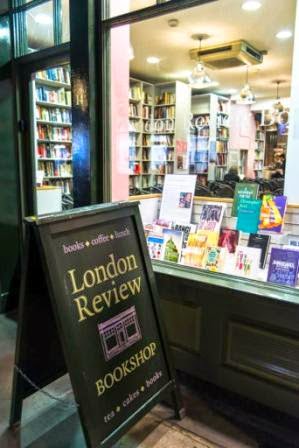
These two questions are posed on the flyleaf of Philip Marsden’s most recent book, Rising Ground. His book also lent its title to an interesting event which I attended at the London Review Bookshop last Tuesday. Rising Ground – Place Writing Now brought together Philip Marsden and two other writers, Ken Worpole, and my friend, Julian Hoffman, in a discussion chaired by the Whitechapel Gallery’s Film Curator, Gareth Evans, to unfold the question – what is place?

http://philipmarsden.co.uk/books.html
“Writing about place,” is, according to the event blurb, “a sub-genre of travel writing that subverts it by being about staying put, rather than moving.” It was a fascinating evening which certainly helped broaden the horizons of the mind. Each of the three writers was in agreement that the idea of place is intrinsically linked to perception. In using the framing device of place there is a clear distinction between knowledge and experience. We might know a particular landscape as intimately as another person in the detailed terms of its geography, its topography, its history, or how it might have changed or been changed over time, but that other person may well have had a radically divergent experience of that same place to our own.

http://julianhoffman.wordpress.com/the-small-heart-of-things/
As Julian Hoffman writes in his book, The Small Heart of Things --- “Place has a profound bearing upon our lives, from the countries we are born into, or end up inhabiting, to the light, landscape, and weather peculiar to our home regions. Each has a say in shaping our cultures and souls.” Our relationships to the places we inhabit or simply pass through can be deepened through ‘an equality of perception’ if we only stop ourselves and take a moment to examine it – perceptions small and fleeting can be just as significant to us as grand vistas and imposing, centuries old scenery. Awareness is the key, as Hoffman goes on to recount: “One autumn, while putting the shopping in the bed of our truck, I watched a kestrel arrow low over the supermarket car park, snatch a small mammal from an abandoned lot piled high with rubble and debris, and settle on a hummock of broken concrete beneath a streetlamp to feed. It was so close that I could make out the black fretwork on its cinnamon back, and our eyes locked together when its head suddenly swivelled. Shoppers pushed their trolleys past me, and I could hear the slam of closing doors, but I was so caught up in the eyes of the kestrel that I just stood there with a bag dangling from my hand.”

http://www.worpole.net/index.html
Each of the three writers spoke about particular places they have come to know and explored intimately, which they have then gone on to write about. For each, the motivations and modes of perception may have been different yet all three were deeply rooted in the concept of being at home. In this context, Hoffman’s favourite idea expressed in the words of the poet, Rainer Maria Rilke, that “everything beckons us to perceive it,” was frequently quoted and referred back to by each of the writers in relation to their own work and experiences with regard to place. For Marsden it is a personal search for the spirit of place; for Hoffman it is about being at home in a beckoning world; and, for Worpole it is about questioning received opinions, and, in so doing, forming our own ‘re-representations’ of what a particular landscape is, or represents, to us personally.  

Philip Marsden’s most recent book, Rising Ground, very interestingly for me (although I’ve yet to read the whole book) explores the wider locales around his home in Cornwall. Leafing through the book I can see many references to places both widely known and more obscure which are very well known to me having grown up during long childhood summers spent in that particular county. It will be interesting to see how different or coincident my experiences of these places will measure against his own. Julian Hoffman’s wonderfully lyrical book looks at his adopted home in Greece by the Prespa Lakes, located in a transnational boundary park whose shores are also shared by Albania and the former Yugoslav Republic of Macedonia – with all the complicated cultural history and diversity that such human imposed national boundaries have brought to bear on the everyday lives of those people sharing a home and a personal heritage in that locale. Ken Worpole’s most recent book, The New English Landscape, is a collaboration with the photographer, Joseph Orton, which proposes a new paradigm for topographical beauty based on the post-industrial landscape of the Thames estuary, another part of the world closely connected to me as I now live only a few yards away from the banks of this great river.

http://www.rachellichtenstein.com/content/rodinskys-room
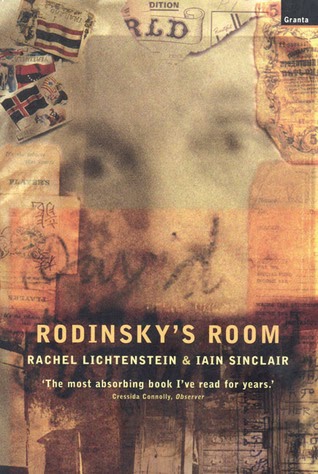
There are many ways to experience and to describe place. Personal response is one means; another might be through the stories of other people, of which the writings of Rachel Lichtenstein were cited as a foremost example. Indeed, her Rodinsky’s Room (written with Iain Sinclair) is a fascinating book – mysterious and moving by turns, in the narrative arc of her investigations into the remnant world of one man’s vacant home, still filled after many undisturbed years with all his abandoned possessions. A thoughtful exploration, forlorn but ultimately uplifting in its sifting through the accumulated layers of perception, projection, and the consequent misconceptions which seemed to have accrued through time, until person and place are ultimately, in several senses of the word, – relocated.

As Philip Marsden noted there can be ‘a cacophony of interpretation’ which builds through time in relation to particular landscapes. These can be both positive and negative. Whether it be a depressive dismissal of a decaying post-industrial landscape, or the idealised projections through which an unknowable Neolithic landscape might evocatively enter and captivate our imagination, or vice versa – these surmises probably say more about us and the nature of ourselves than the true essence of such a landscape itself.

http://www.londonreviewbookshop.co.uk/
Writing about place can be a means of ‘digging in and putting down roots,’ or it can be about looking back after displacement and viewing the place from which we’ve come with eyes renewed; our reflections become refracted, lingering resonances reverberating in unexpected ways – we may even end up feeling closer to the place we’ve left simply because we’ve left it. In this sense, opening yourself to a new way of perceiving somewhere – ‘unfolding place’ – is a renewed way of experiencing it. As Ken Worpole observed, accepting a ‘cookie cut’ notion of what a place is like merely on the say-so of other people is simply a way of denying ourselves our own experiences, and thereby depriving ourselves of our own intuitive responses, which – if we stopped to examine them – may well be surprisingly different to those of the hive mind. Rural and urban spaces need not necessarily be seen in opposition or viewed as enemies of one another. They may even be closer (physically) and more closely interlinked (on multiple levels) than we realise; by putting ourselves (physically and mentally) in motion we can exchange one for the other more completely than we might otherwise have assumed. 

http://www.londonreviewbookshop.co.uk/events/2014/11/rising-ground-place-writing-now


Just as those living transient lifestyles in a constant state of motion – such as hunter-gatherer communities, or nomadic shepherds, who continually relocate and renew their home-bases, and so are seen to be idyllic, happy, and at ease in their landscapes, whereas sedentary farmers are said to hate the land which they feel chained to – so we can see how perceptions of place drawn from outside and inside can differ and perhaps are not so clearly cut after all. Just as landscapes can bleed gradually, one into another, so too can our perceptions of place, as well as other people, and our own individual and collective locations within these landscapes which we have shaped into being as the places which we inhabit – the world around us, which we call our own whilst simultaneously sharing it with others.

http://www.londonreviewbookshop.co.uk/
 

Rising Ground – Place Writing Now at the London Review Bookshop, well attended with many thoughtful questions and observations from the audience, was a thought provoking and enjoyable evening. One which certainly made me see the world rather differently than I perhaps had done so before. I’m sure the thoughts and ideas which this evening inspired in me, and which I’ve tried to capture here, will linger long in mulling, and so permeate into my own perceptions of place renewed. 


http://www.londonreviewbookshop.co.uk/


See 'Person & Place' for my review of a similarly themed event on 'Capturing a Sense of Place' with the writers Mahesh Rao, Colin Thubron & Tracy Chevalier at Daunt Books earlier this year.